festival · festive · ganesh-chaturthi · modak · mithai · no-onion-no-garlic · sattvic
Mawa Modak
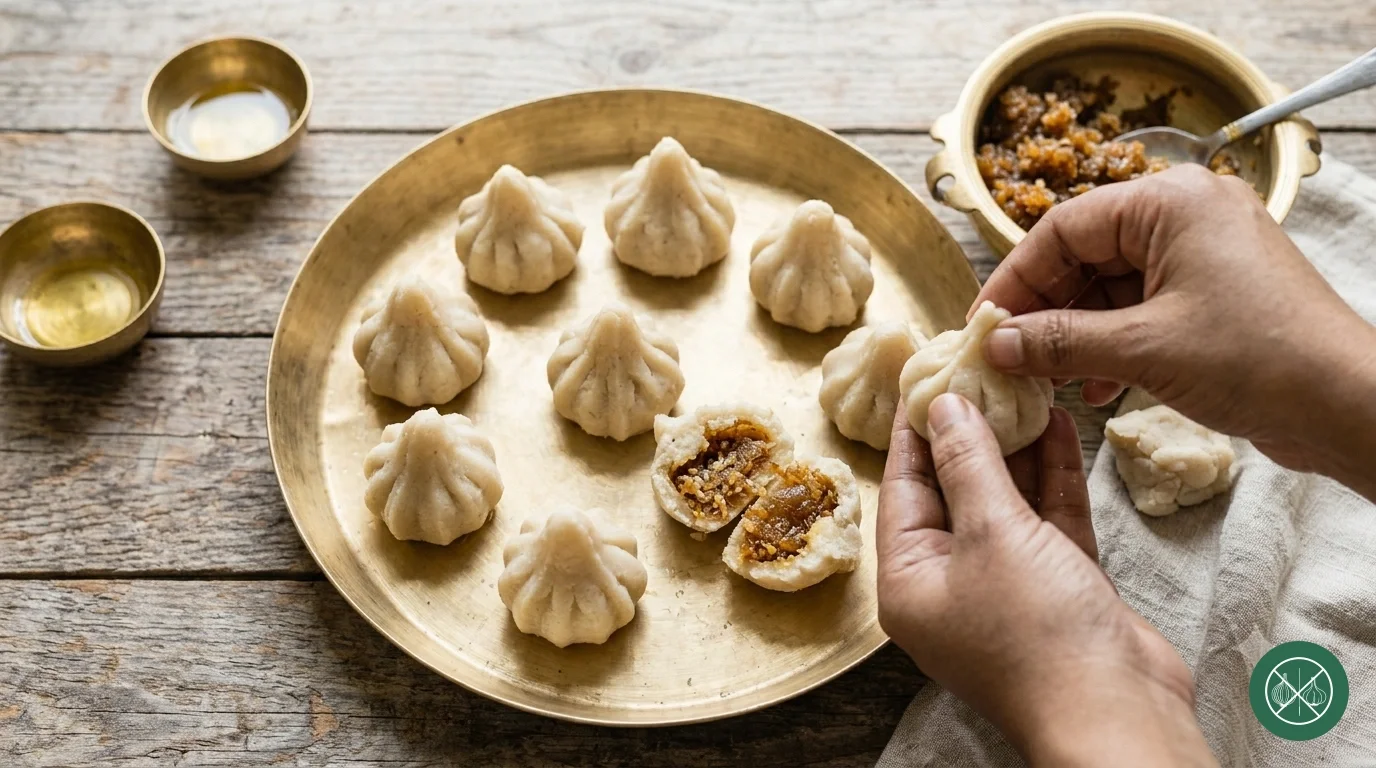
Mawa modak is khoya cooked down with sugar until it leaves the pan, then pressed into brass modak moulds while still warm. The whole recipe lives or dies on one judgement call: sugar melts the khoya into a loose batter, and you have to cook that batter back until it balls up around the spatula but is still soft — pull it early and the modak slumps and weeps syrup, cook it past that point and it turns grainy and cracks along the pleats when you unmould. Grate or crumble the khoya finely first so it melts evenly, keep the flame low once the sugar goes in, and shape while the dough is warm enough to take the mould's ridges. Cardamom goes in off the heat so it does not cook out.
Cook along · 14 steps
Method
- 1
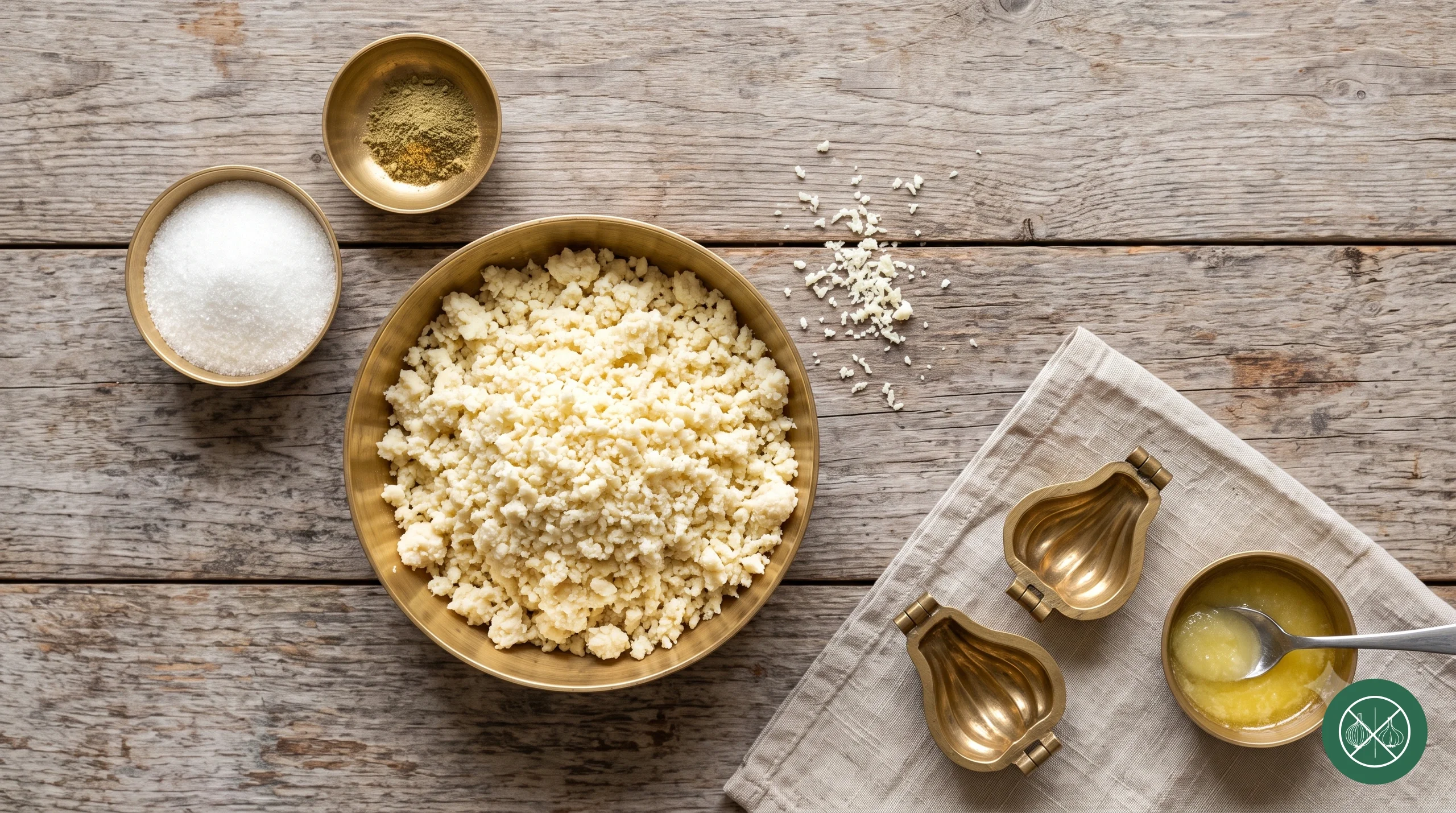
Set up the mise-en-place: Crumble the mawa fine with your fingertips into a heavy bowl — no lumps bigger than a pea, or they will stay as hard specks in the finished modak. Keep the sugar, cardamom powder, melted ghee and the brass modak moulds within reach, because once the mawa starts melting you will not have a free hand.
- 2
Grease the moulds: Rub the inside of each brass modak mould with a film of ghee, working it into the pleats with a fingertip, and grease a thali or plate for the dough. Do this before you start cooking — greasing a mould with sticky fingers later is miserable.
- 3
Warm the kadhai: Heat a heavy kadhai or non-stick pan on low. Add 1 tbsp of the melted ghee and swirl it over the base and up the sides.
- 4
Melt the mawa: Add the crumbled mawa and stir it over low heat for 3-4 minutes until it loosens, goes glossy and smells nutty. It should never brown — the moment you see colour at the edges, lift the pan off the flame and keep stirring.
- 5
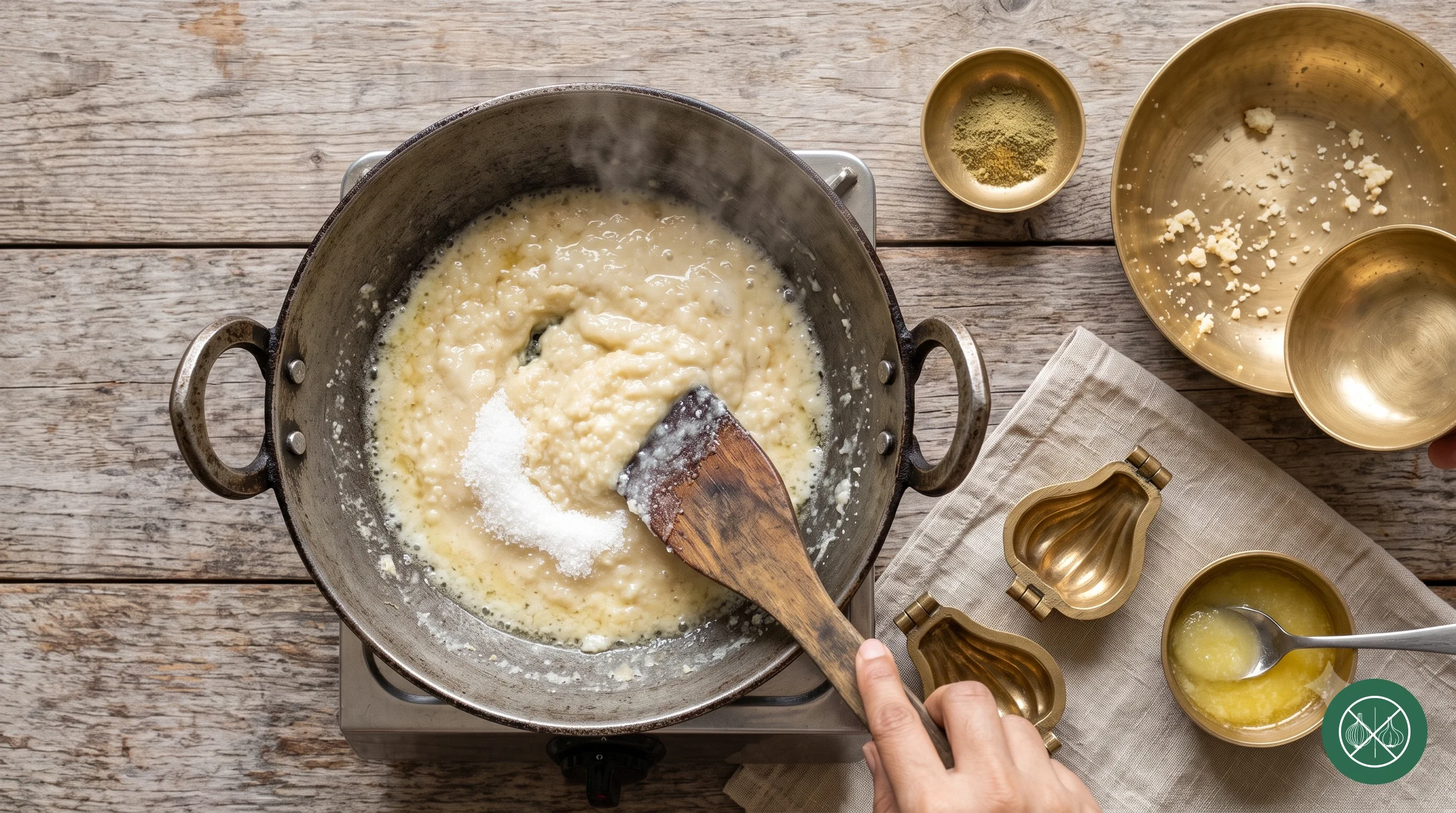
Add the sugar: Tip in the sugar and keep stirring. The sugar will melt and the mixture will go thin and soupy within a minute — that is expected, not a mistake. Add the saffron milk now if using.
- 6
Cook it back: Keep the flame low and stir constantly, scraping the base and sides, for 8-12 minutes. The mixture thickens in stages: soupy, then a thick bubbling porridge, then a mass that starts pulling away from the sides of the pan. Do not raise the heat to hurry it — sugar on high heat crystallises and the dough goes sandy.
- 7
Judge the doneness: The mixture is ready when it gathers into a single soft lump that follows the spatula and leaves the base clean for a second before flowing back. A dab pressed between thumb and finger should feel like warm soft dough, not sticky batter. Pull it off the heat right there.
- 8
Add the elaichi: Off the flame, stir in the cardamom powder and the remaining 1 tbsp ghee. The ghee makes the dough supple and stops it drying as it cools.
- 9
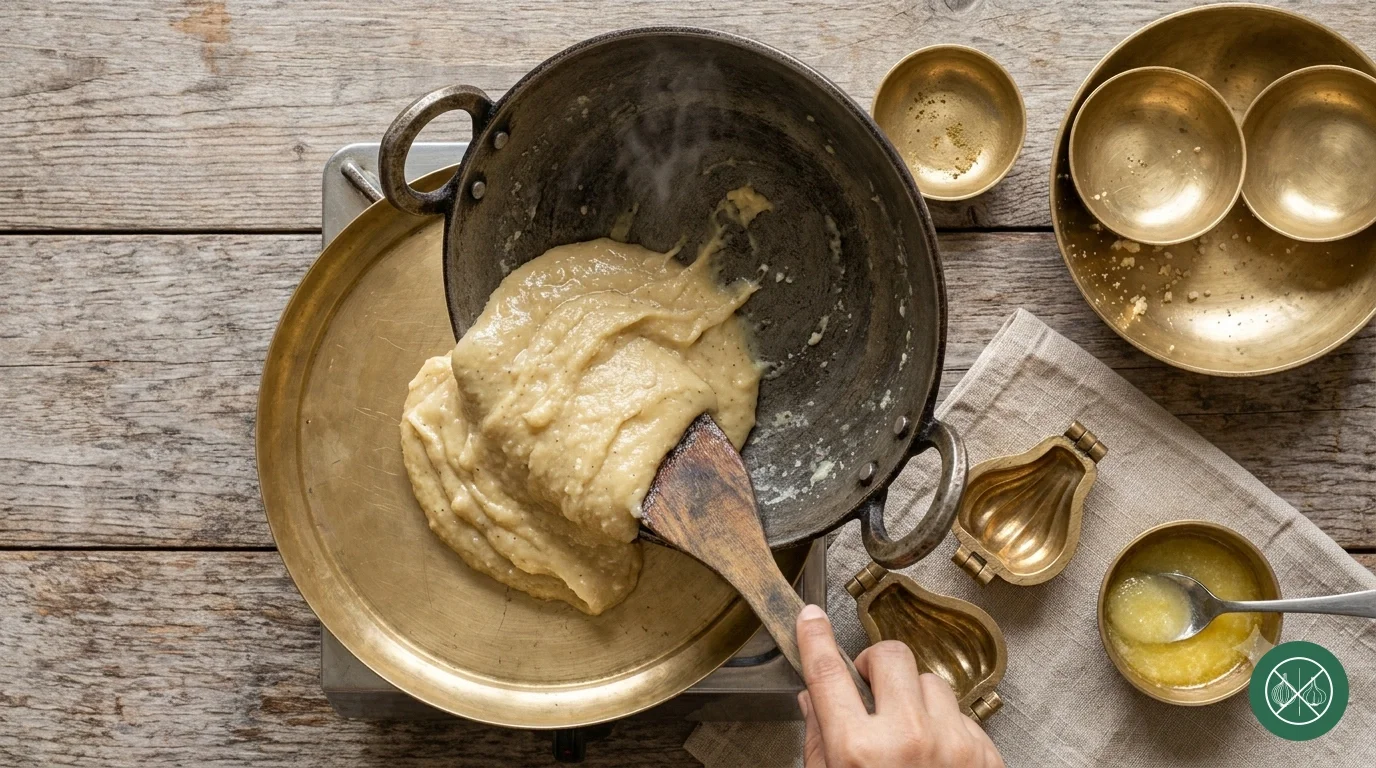
Turn it out: Scrape the whole mass onto the greased thali and spread it into a low mound so it cools evenly. If it looks dry and cracked at the edges, work in the 2 tbsp milk a teaspoon at a time.
- 10
Cool to warm: Let it sit 5-8 minutes, until you can handle it comfortably but it is still clearly warm. Knead it smooth with a greased palm for a minute — this evens out the texture and gives the modak a glossy face. Do not let it go cold and stiff; it will crack in the mould.
- 11
Fill the mould: Close the brass mould, pinch a lime-sized ball of the warm dough, and press it firmly into the mould through the open base with your thumb, pushing it right down into the pointed tip so no air pocket is left at the top.
- 12
Level and seal: Flatten the base flush with the mould's rim and scrape off any excess. A domed base means the modak will not stand straight.
- 13
Unmould: Open the hinged mould gently and let the modak drop onto your palm or straight onto a greased thali. If it sticks, re-grease the mould before the next one. Repeat with the remaining dough — you should get 12-14 modak — keeping the unused dough covered so it does not skin over.
- 14
Set and serve: Arrange the modak on a thali and leave them uncovered for 20-30 minutes to firm up. They hold their shape at room temperature for a day; refrigerate after that, and bring back to room temperature before offering as bhog, since cold mawa tastes waxy.
More festival recipes
Ukadiche Modak (Steamed Rice Flour Modak)
Kadalai Sundal (Chana Sundal)