festival · festive · ganesh-chaturthi · modak · steamed · sweet · maharashtrian · no-onion-no-garlic
Ukadiche Modak (Steamed Rice Flour Modak)
Ukadiche modak live or die on the ukad — rice flour scalded with an exact 1:1 volume of boiling water, then kneaded while it is still almost too hot to hold. Flour added to water that has gone off the boil, or dough kneaded after it cools, gives a grainy shell that splits the moment you pleat it. The coconut-jaggery saran must be pulled off heat while the syrup still coats the coconut: cooked dry it turns chewy, left wet it weeps through the shell in the steamer. These are steamed on a banana-leaf-lined plate, not boiled, so the pleats keep their edges.
Cook along · 15 steps
Method
- 1
Prep the filling ingredients: Grate the coconut fine — fresh, not desiccated, since the water in it is what melts the jaggery. Crumble or grate the jaggery so it dissolves evenly instead of sitting in lumps.
- 2
Toast the poppy seeds: Dry-roast the khus khus in a small pan on low for 1-2 minutes until it smells nutty and a few seeds start popping. Tip out at once so it does not scorch.
- 3
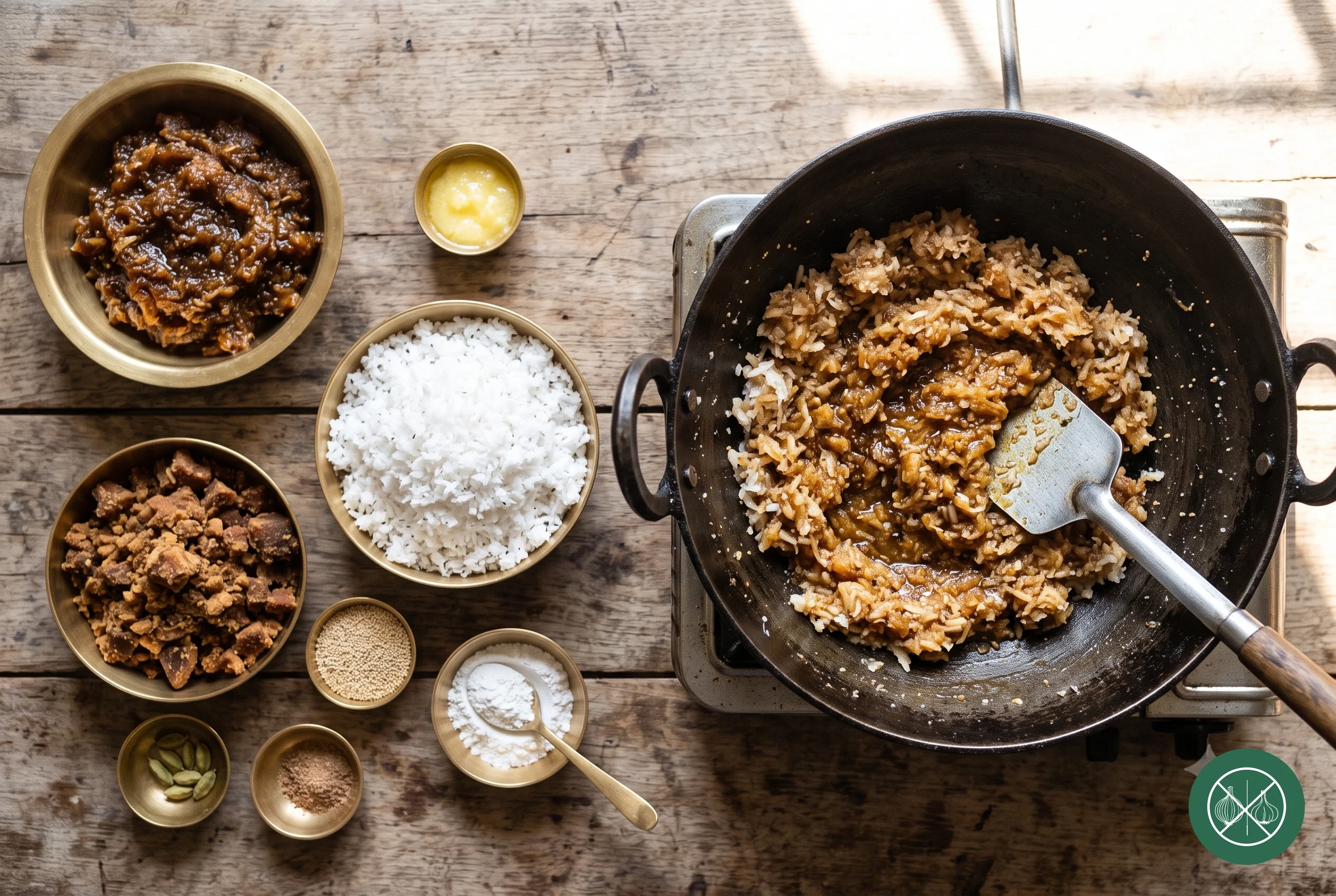
Cook the saran: Heat 1 tsp ghee in a kadhai, add the coconut and jaggery together and cook on medium-low, stirring constantly. The jaggery melts into a syrup in 2-3 minutes, then keep going 5-7 minutes until the mixture looks glossy and just holds together when pressed.
- 4
Stop it at the right point: Pull the pan off heat while the filling is still moist and clumping, not sandy and loose. Overcooked jaggery sets hard once cool and makes the filling chewy.
- 5
Finish and cool: Stir in the elaichi powder, grated nutmeg and toasted poppy seeds. Spread the saran on a plate and cool completely — warm filling steams inside the shell and tears it. You should have roughly 1 cup of filling, enough for 12 modak.
- 6
Boil the water for the ukad: Bring 1 cup water to a hard rolling boil with 1 tsp ghee and 1/4 tsp salt. Measure the water and flour with the same cup; the 1:1 ratio is what gives a pliable shell.
- 7
Scald the flour: With the water at a full boil, tip in all the rice flour at once and stir fast with the back of a wooden spatula until no dry flour is left. Cover, cook on the lowest flame for 2 minutes, then take off heat and leave covered for 5 minutes.
- 8
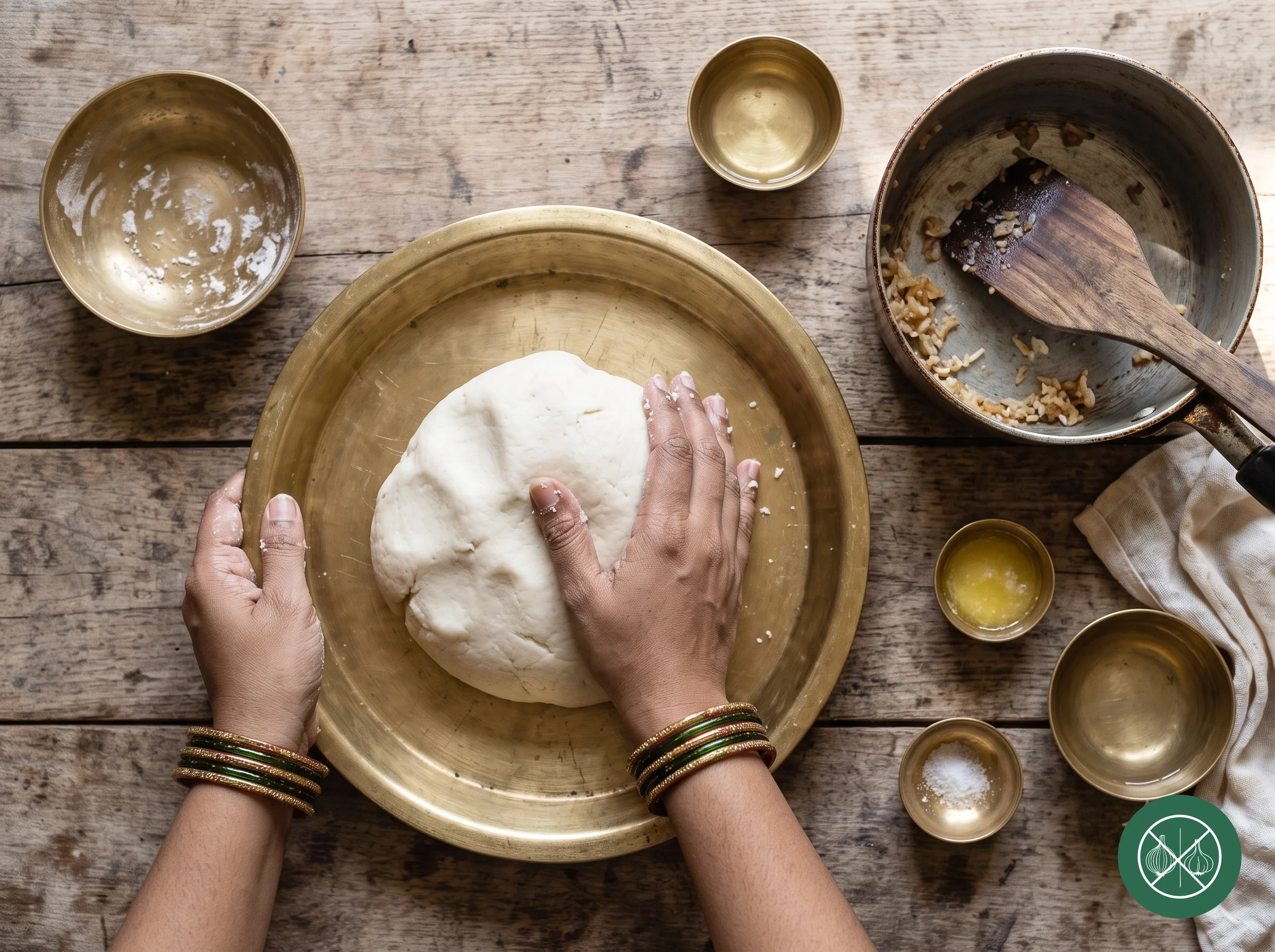
Knead hot: Turn the steaming dough onto a greased thali. Grease your palms with ghee and knead 4-5 minutes while it is still very hot, pressing with the heel of the hand until it is smooth, satiny and takes a pressed edge without cracking. If it feels stiff, wet your palm with a little hot water and knead that in.
- 9
Rest under a damp cloth: Shape into a ball, cover with a damp muslin and keep covered at all times from here on. Exposed rice dough skins over within a minute.
- 10
Divide: Pinch off about 12 walnut-sized balls, roll each smooth between greased palms, and return them all under the damp cloth, taking out one at a time.
- 11
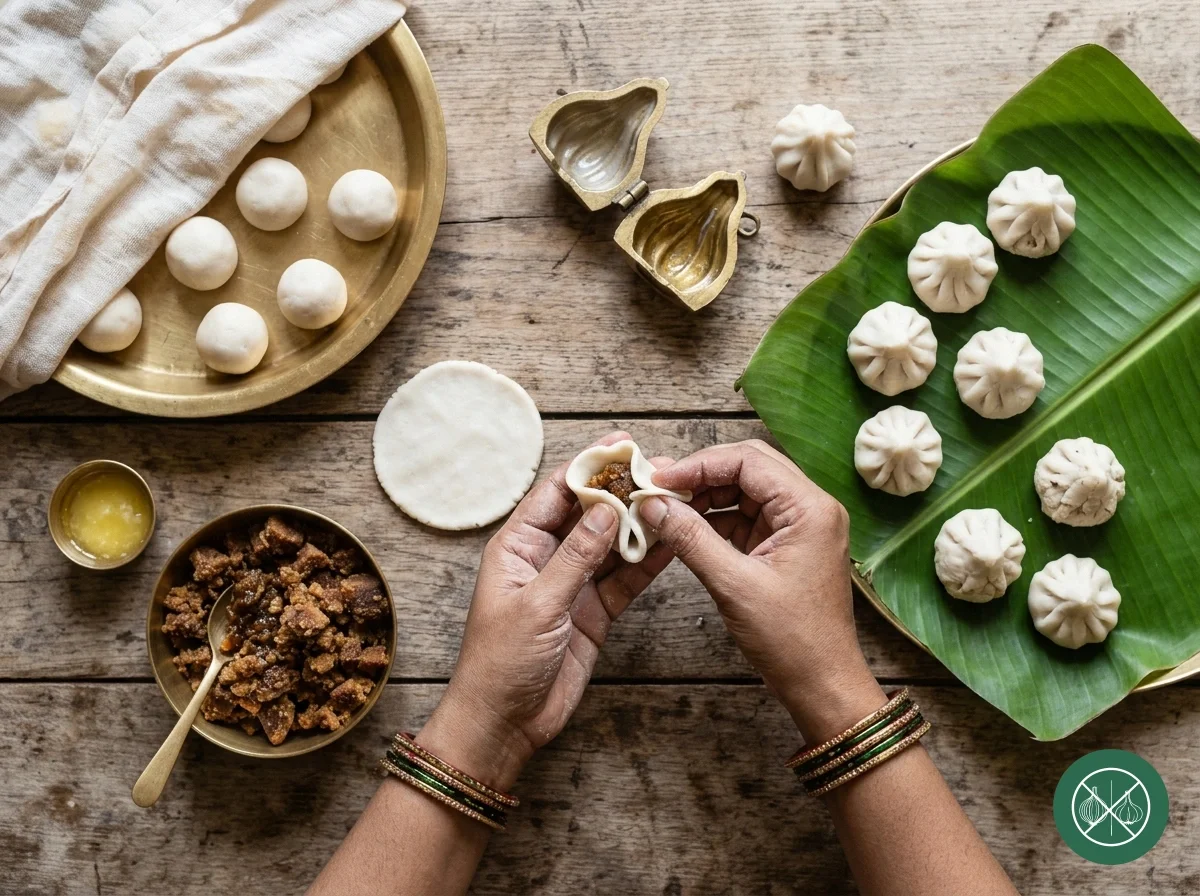
Shape and pleat the cup: Flatten one ball into a 3-inch disc on a greased palm, thinning the edge more than the centre. Pinch 9-11 even pleats around the rim with a greased thumb and forefinger, so it looks like a fluted cup. A brass modak mould, greased inside, works the same way if pleating by hand is a struggle.
- 12
Fill and seal: Spoon in a heaped teaspoon of cooled saran, gather all the pleats up to the middle, press them together and twist into a fine peak. Any gap here leaks jaggery syrup during steaming, so seal firmly.
- 13
Line the steamer: Set the water in the steamer base to boil, lay a wiped banana leaf over the steamer plate and smear it with ghee. The leaf stops sticking and gives the shell its faint leaf scent; a greased muslin works if you have no leaf.
- 14
Steam: Arrange the modak on the leaf with a finger gap between them, lid on, and steam over boiling water for 10-12 minutes. They are done when the shells turn from chalky white to slightly translucent and glossy.
- 15
Rest and serve: Switch off, leave the lid on for 2 minutes, then lift the modak off with a light twist. Serve warm with a spoon of hot ghee poured over the peak, breaking one open to let the ghee run into the filling.
More festival recipes
Kadalai Sundal (Chana Sundal)
Rava Modak