festival · festive · ganesh-chaturthi · sattvic · no-onion-no-garlic · south-indian · protein · prasad
Kadalai Sundal (Chana Sundal)
Sundal is white chana pressure-cooked until a chickpea crushes between thumb and finger with light pressure but still holds its round shape, then tossed through a coconut-oil tempering. The two things people get wrong are cooking the chana to mush and draining it badly - wet chana turns the pan steamy and the sundal goes sticky instead of dry and separate. The tempering is built in a hot kadai with the oil already shimmering: mustard must pop fully and urad dal must turn pale gold before the chana goes in, since nothing after that point gets enough heat to cook raw dal. Salt goes in at the end, where it sits on the surface of each chickpea instead of dissolving into cooking water, and fresh grated coconut goes in off the flame so it stays white and moist rather than frying down.
Cook along · 15 steps
Method
- 1
Soak the chana: Rinse 1 cup dried white chana until the water runs clear, then soak in 4 cups of water for at least 8 hours or overnight. It will roughly double in size; if it is still hard and wrinkled after 8 hours, soak longer. Do not add cooking soda to the soaking water - it softens the chana past the point where it holds its shape.
- 2
Pressure cook: Drain the soaked chana, put it in the cooker with 3 cups fresh water and no salt, and cook on high for 1 whistle, then on low for 8-10 minutes. Let the pressure drop on its own - opening early makes the skins split and the chana collapse.
- 3
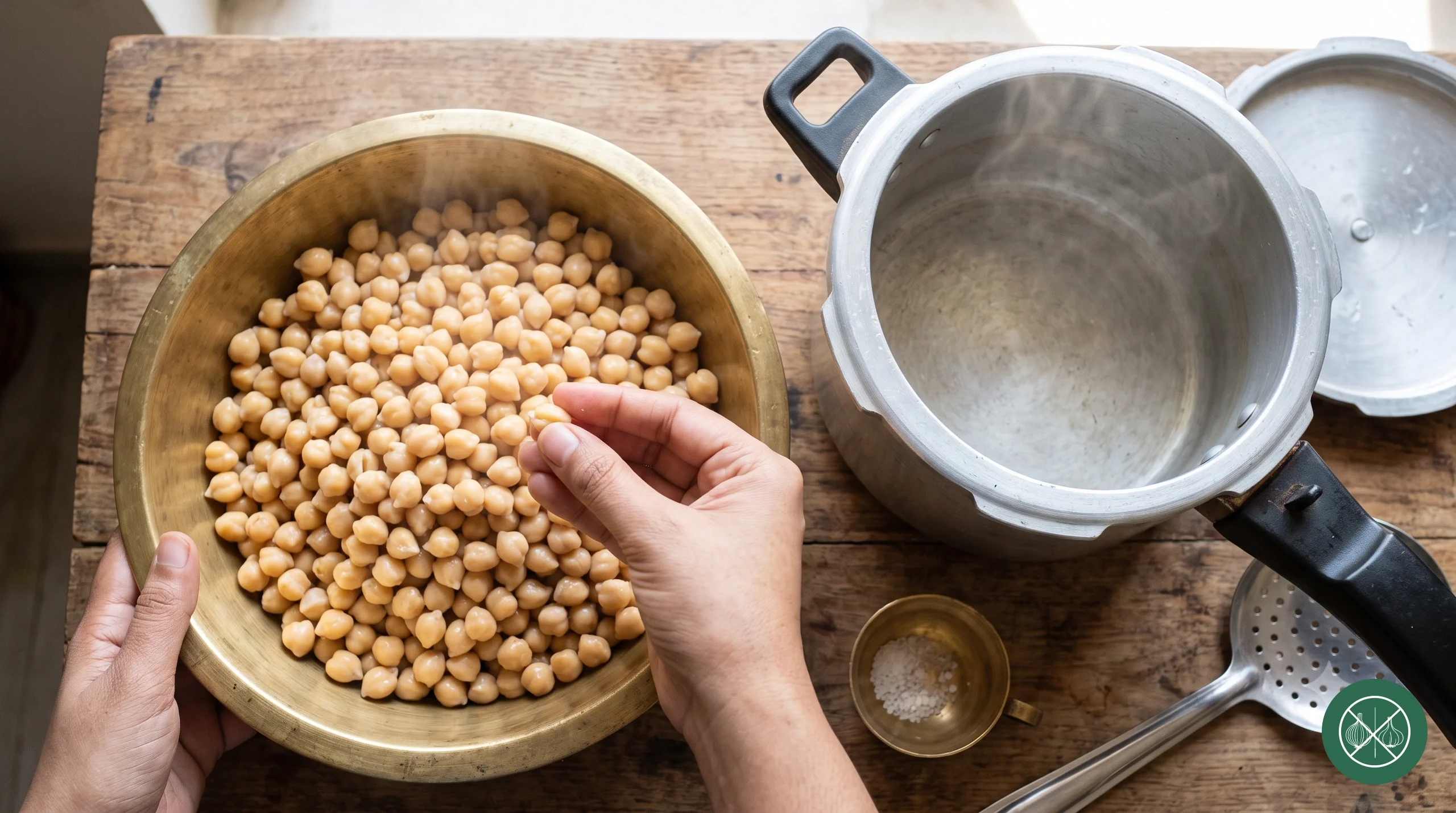
Check the doneness: Lift out one chickpea and press it between thumb and finger. It should crush with light pressure but still be a whole round pea, not a paste. If it fights back, cook another 5 minutes on low pressure.
- 4
Drain well: Pour the chana into a colander and let it sit for 5 minutes so every drop of water runs off. Save 2 tbsp of the cooking water and discard the rest, or keep it for dal. Wet chana will steam in the pan and turn the sundal gluey.
- 5
Heat the kadai: Set a heavy iron kadai on medium heat and add 2 tbsp coconut oil. Let it get properly hot - a mustard seed dropped in should pop within two seconds.
- 6
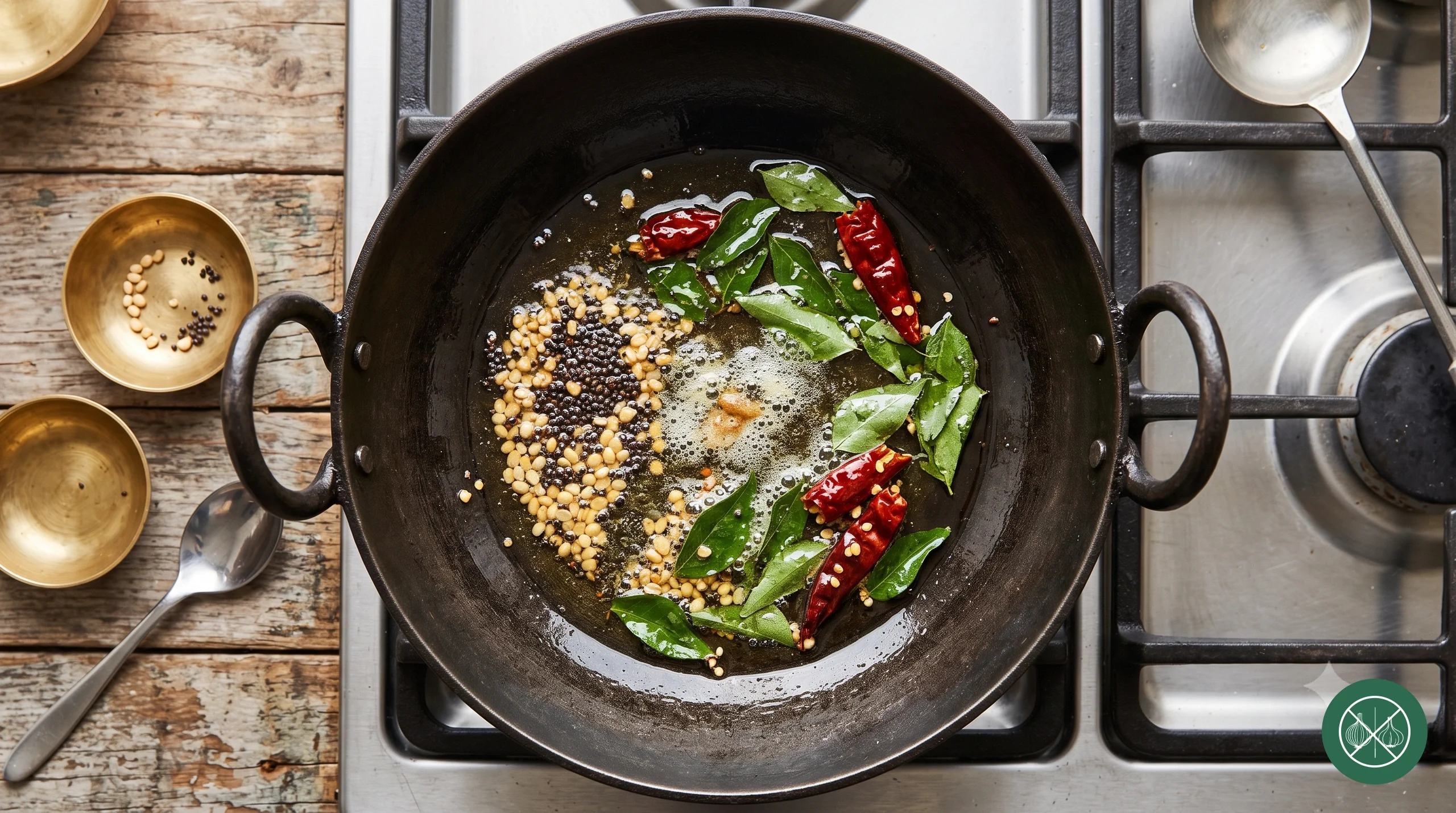
Pop the mustard: Add 1 tsp mustard seeds and wait until they finish crackling, about 20-30 seconds. Keep a lid half over the pan. If they do not pop, the oil was not hot enough and the sundal will taste raw.
- 7
Fry the dals: Add 1 tsp urad dal and 1 tsp chana dal and fry 30-40 seconds, stirring, until both turn pale gold. Lower the flame the moment they colour - they go from gold to bitter in seconds.
- 8
Add chilli and curry leaves: Drop in the broken dried red chillies and the curry leaves. They will spit; stand back. Fry 10 seconds until the leaves go crisp and the chillies darken slightly.
- 9
Season the oil: Pull the kadai off the flame, add 1/4 tsp hing and 1/4 tsp turmeric and swirl once for 5 seconds so the turmeric blooms in the residual heat without burning, then set the pan back on low.
- 10
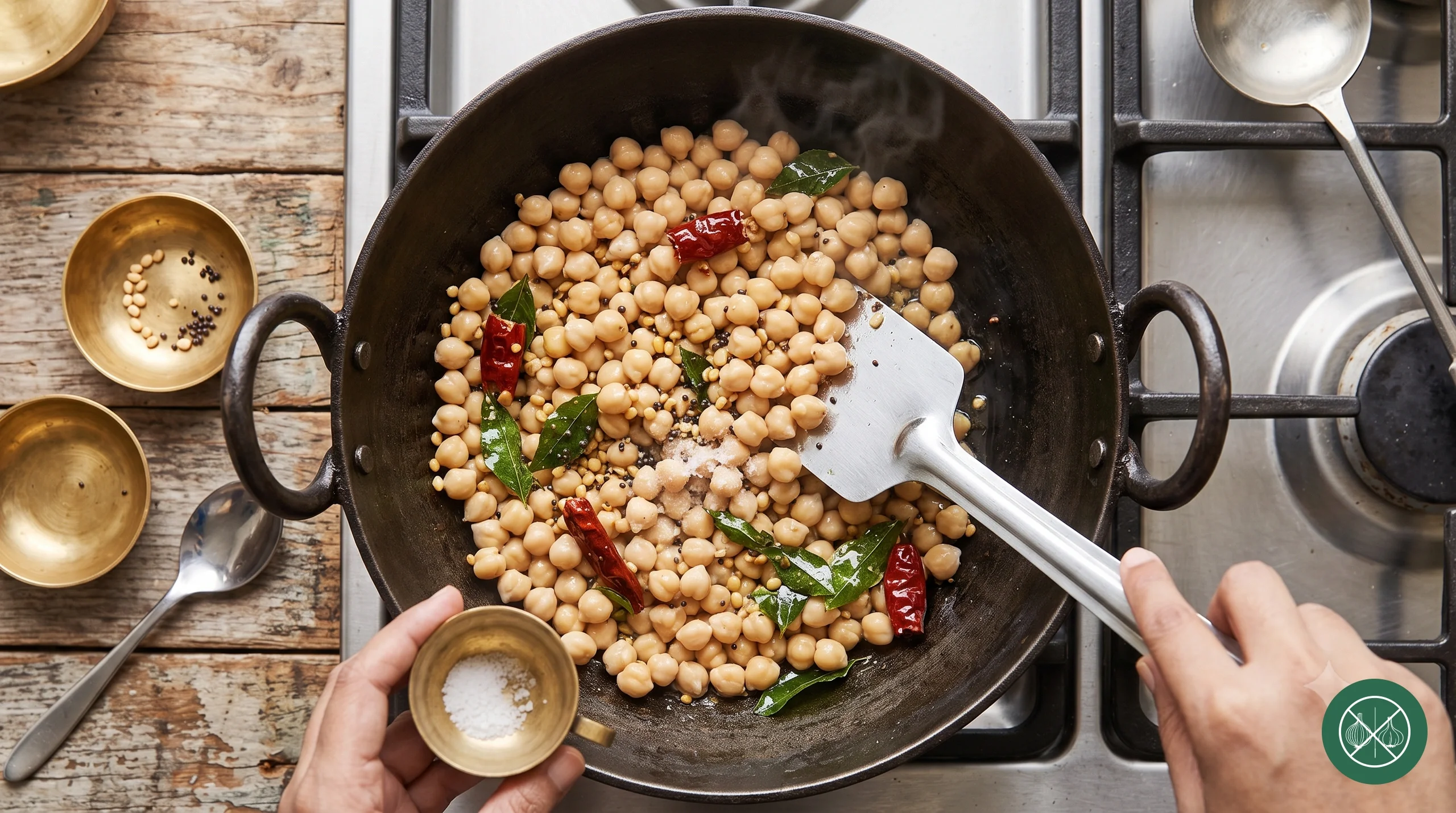
Add the chana: Tip the drained chana into the kadai and fold it through the tempering with a flat spatula. Use a lifting-and-turning motion rather than stirring so the chickpeas stay whole. Add the reserved 2 tbsp cooking water if the pan looks dry.
- 11
Salt now: Sprinkle 1 tsp salt over the chana and toss again. Salting at this stage, rather than into the cooking water, leaves it sitting on the surface of each chickpea where you actually taste it.
- 12
Dry it out: Cook on medium-low for 3-4 minutes, turning every 30 seconds, until the chana looks dry and glossy and the pan no longer steams. There should be no liquid pooling at the base.
- 13
Finish with coconut: Take the kadai off the flame. Add 1/2 cup fresh grated coconut and fold it through the hot chana - the residual heat is enough to release its aroma while keeping it white and moist.
- 14
Adjust and rest: Squeeze in 1 tbsp lemon juice if using, taste for salt, and let the sundal sit 5 minutes so the coconut takes on the tempering flavour.
- 15
Serve: Serve warm in a bowl with a little extra grated coconut scattered over the top. Sundal is offered as naivedyam first and eaten the same day - it dries out and hardens if refrigerated.
More festival recipes
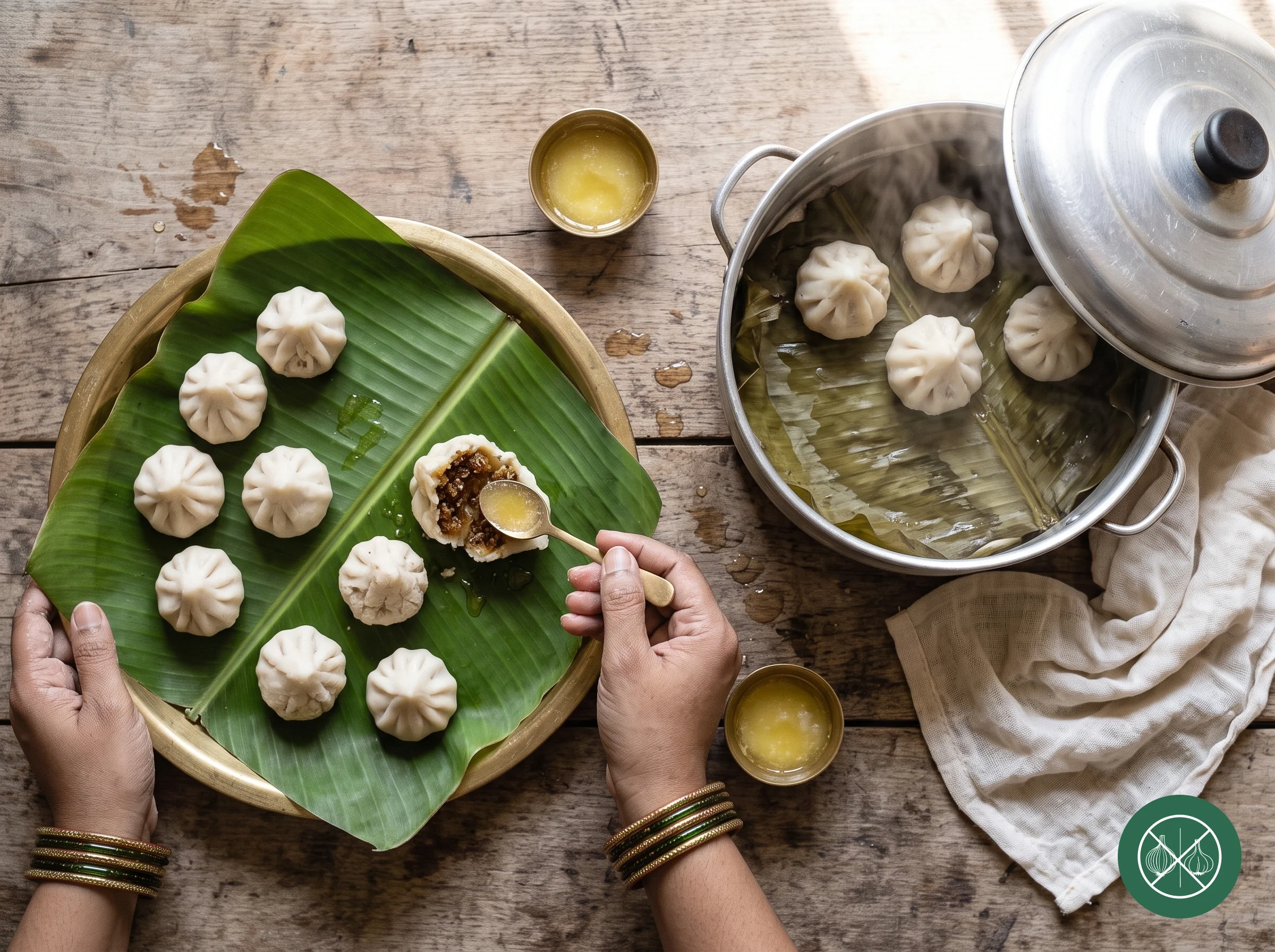
Ukadiche Modak (Steamed Rice Flour Modak)
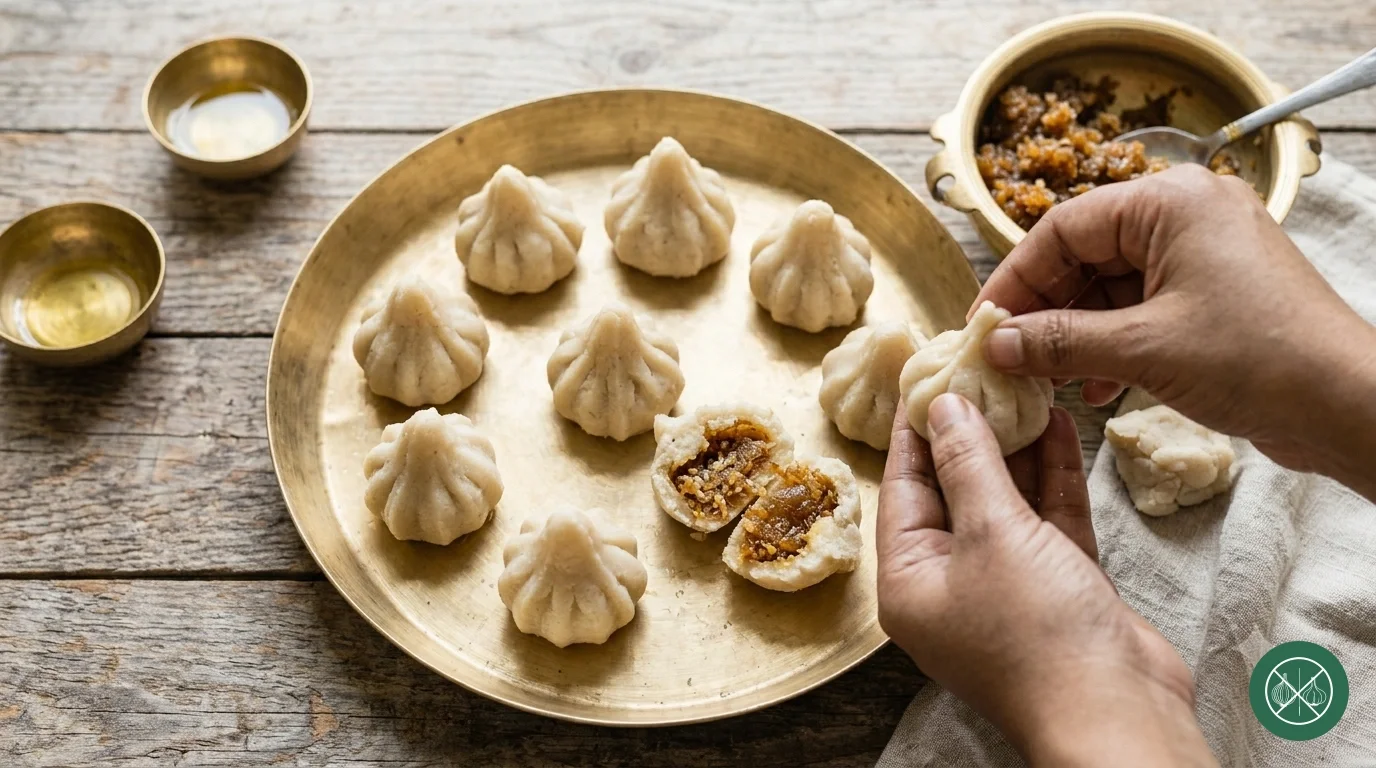
Rava Modak