festival · festive · ganesh-chaturthi · maharashtrian · chana-dal · jaggery · sattvic · no-onion-no-garlic · flatbread
Puran Poli
Puran poli lives or dies on two things: how dry you cook the puran and how slack you keep the dough. Chana dal must be boiled just past tender but never mushy — drain the cooking water (keep it, that is your katachi amti) or the jaggery will loosen the puran into a paste that tears every poli. The dough is the opposite: maida and atta kneaded very soft with oil or ghee and rested a full hour so it stretches thin around the filling instead of splitting. Roll from the centre outward with light pressure, and ghee the poli only after it is roasted, never before, or the surface fries and stays pale.
Cook along · 17 steps
Method
- 1
Soak and boil the dal: Rinse 1 cup chana dal till the water runs clear and soak it for 1 hour. Drain, then boil in 3 cups fresh water (or pressure cook 3 whistles, then rest till pressure drops) until a dal grain crushes easily between two fingers but the grains still hold shape — 25-30 minutes on the stovetop. Overcooked dal will not dry out later.
- 2
Drain hard: Tip the dal into a sieve set over a bowl and let it drain for 10 full minutes, pressing gently. Save the drained water — that is katachi amti stock, never throw it. The dal must look dry and matte before it meets the jaggery.
- 3
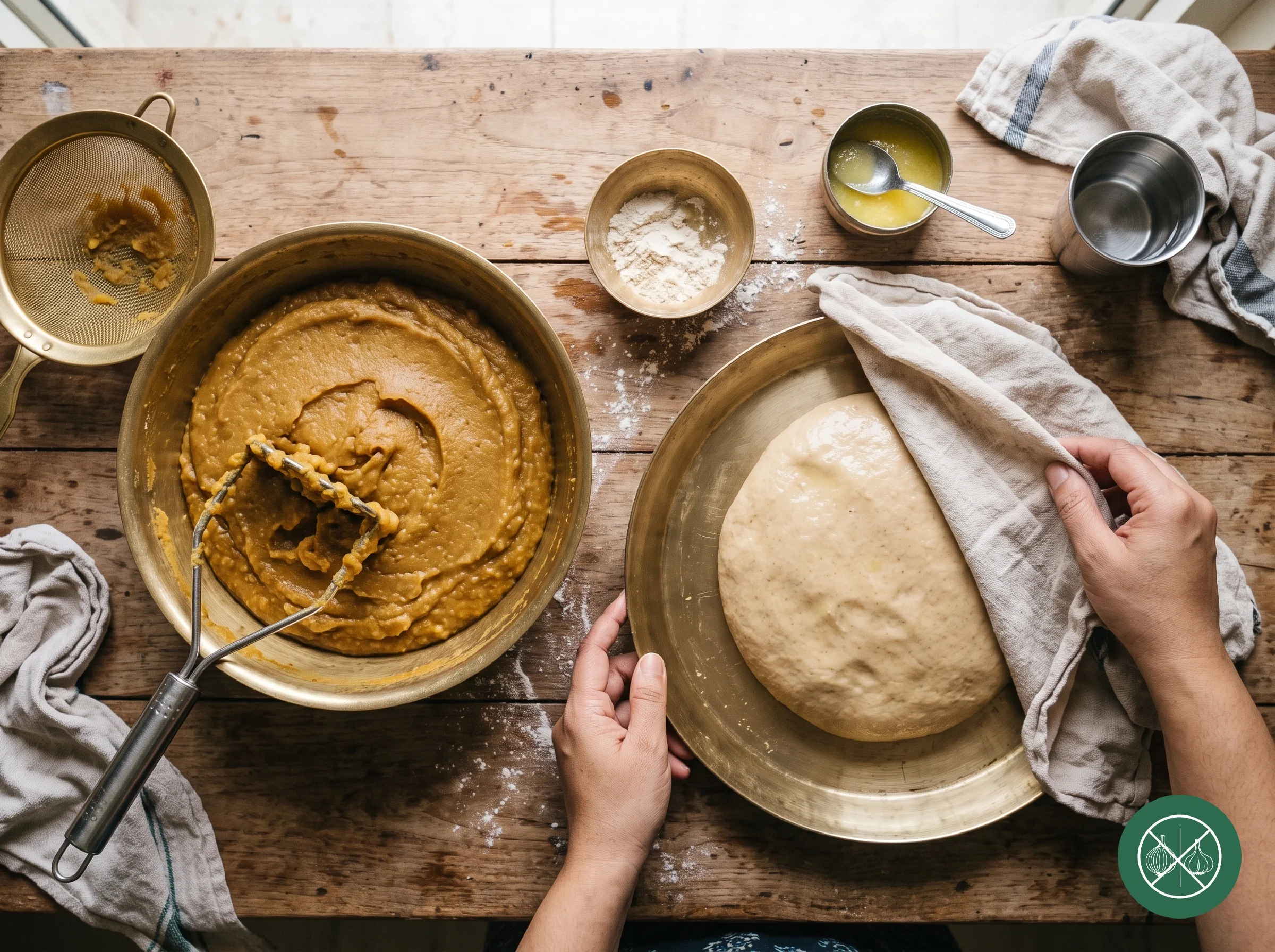
Knead the dough: Mix maida, atta, haldi and salt. Add water in small additions and knead 8-10 minutes into a very soft, slightly sticky dough, softer than chapati dough. Work in the 1/4 cup ghee a spoon at a time until the dough is smooth, glossy and stretches without tearing.
- 4
Rest it: Smear the top with ghee, cover the bowl with a damp cloth and rest at room temperature for at least 1 hour. This rest is what lets the dough stretch thin around the puran instead of cracking. Get the dal on the stove while it rests.
- 5
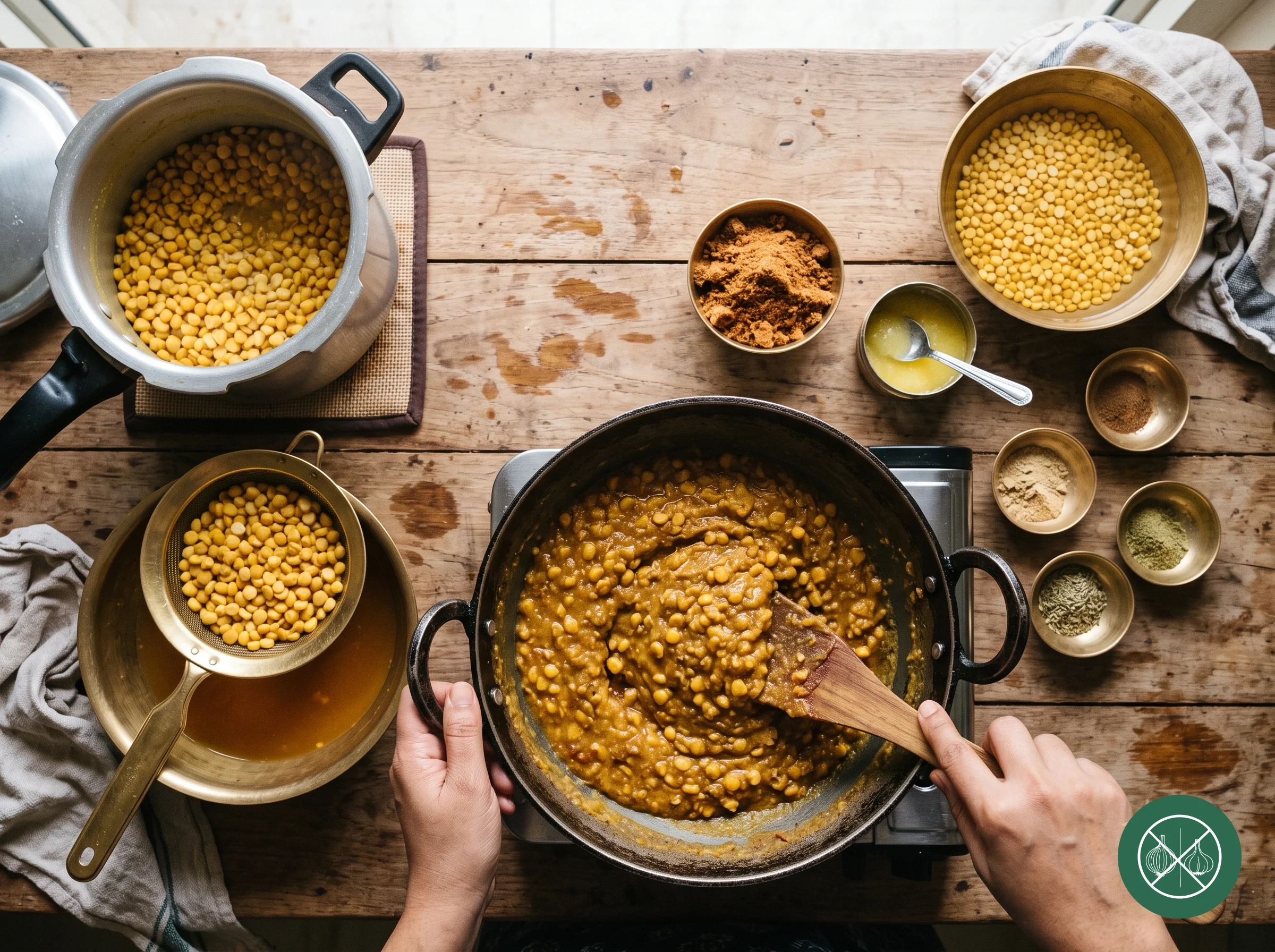
Cook the puran: Heat 1 tbsp ghee in a heavy kadai, add the pinch of hing, then the drained dal and the jaggery. The jaggery will melt and the mixture will go loose and watery within a minute — that is expected.
- 6
Dry it down: Cook on medium, stirring constantly with a flat wooden spatula and scraping the base, for 12-18 minutes until the mass thickens, darkens to a deep amber and stops running back when you draw a line through it.
- 7
Test the puran: It is ready when a spoon or ladle stood upright in the mixture stays standing, or when a scoop holds its shape and does not slump. Under-dried puran leaks through the dough on the tawa.
- 8
Spice and mash: Take the kadai off the heat, stir in elaichi, jaiphal, saunth and saunf. While still warm, mash with a potato masher or pass through a puran yantra until completely smooth with no whole grains — lumps puncture the poli when rolling.
- 9
Cool and portion: Spread the puran in a wide plate to cool to room temperature; it firms up further as it cools. Divide into 10-12 equal balls, roughly the size of a lime.
- 10
Portion the dough: Divide the rested dough into the same number of balls, each noticeably smaller than a puran ball — about half its weight. Puran poli is a filling-heavy bread; at these quantities the puran outweighs the dough close to two to one, which is exactly right.
- 11
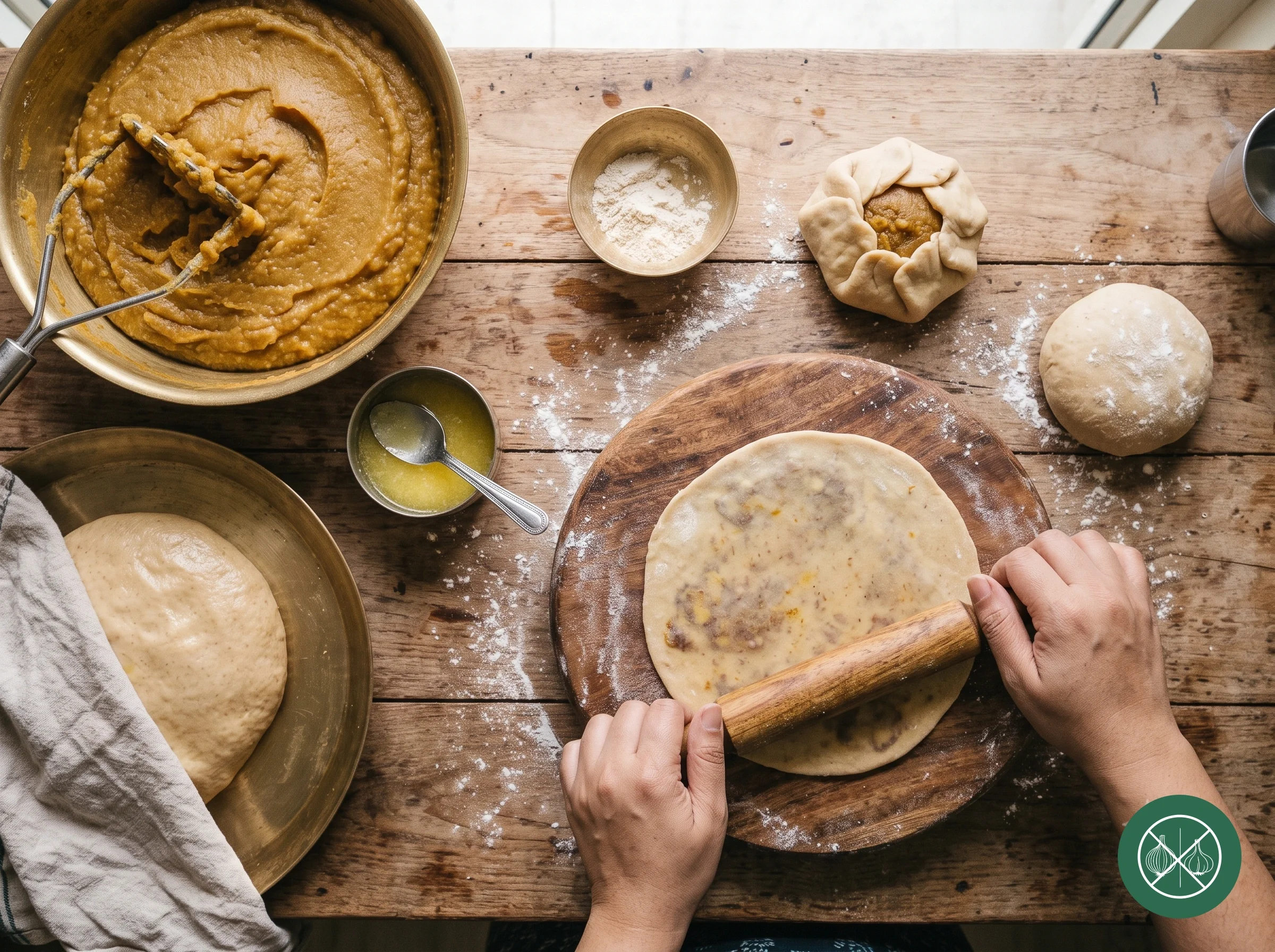
Stuff: Flatten a dough ball on your palm into a 3-inch disc with a thicker centre and thinner edge. Place a puran ball in the middle, pull the edges up and over in pleats, pinch the top shut and pinch off the excess knot. Flatten gently, seam side down.
- 12
Roll: Dust with rice flour and roll on a board with a light, even hand from the centre outward, rotating often, into a 6-7 inch round. Do not press hard on the centre — let the pin ride the edges too so the filling spreads uniformly. Re-dust the moment it sticks.
- 13
Roast the first side: Heat a tawa on medium. Lay the poli on and cook 40-60 seconds until the surface loses its raw sheen and small pale blisters appear. Flip with a flat spatula.
- 14
Roast the second side: Cook 40-60 seconds more until brown spots form and the poli puffs. Press the puffed areas lightly with the spatula so it cooks through evenly. Do not let it go past light golden — dark spots mean scorched jaggery.
- 15
Ghee it after roasting: Once both sides are done, spoon 1/2 tsp warm ghee over the poli and spread it with the back of the spoon. Ghee before roasting fries the surface and keeps the poli pale and stiff.
- 16
Stack and keep soft: Stack the finished polis on a plate lined with a clean cloth and cover them. Steam from the stack keeps them pliable. Repeat with the rest, wiping the tawa clean of stray flour between polis.
- 17
Serve: Serve warm with extra ghee, thick milk, or katachi amti made from the reserved dal water. Puran poli keeps 2 days at room temperature in a covered box and reheats on a dry tawa for 20 seconds a side.
More festival recipes
Ukadiche Modak (Steamed Rice Flour Modak)
Kadalai Sundal (Chana Sundal)