festival · festive · ganesh-chaturthi · modak · mango · mawa · no-steam · sattvic
Mango Modak
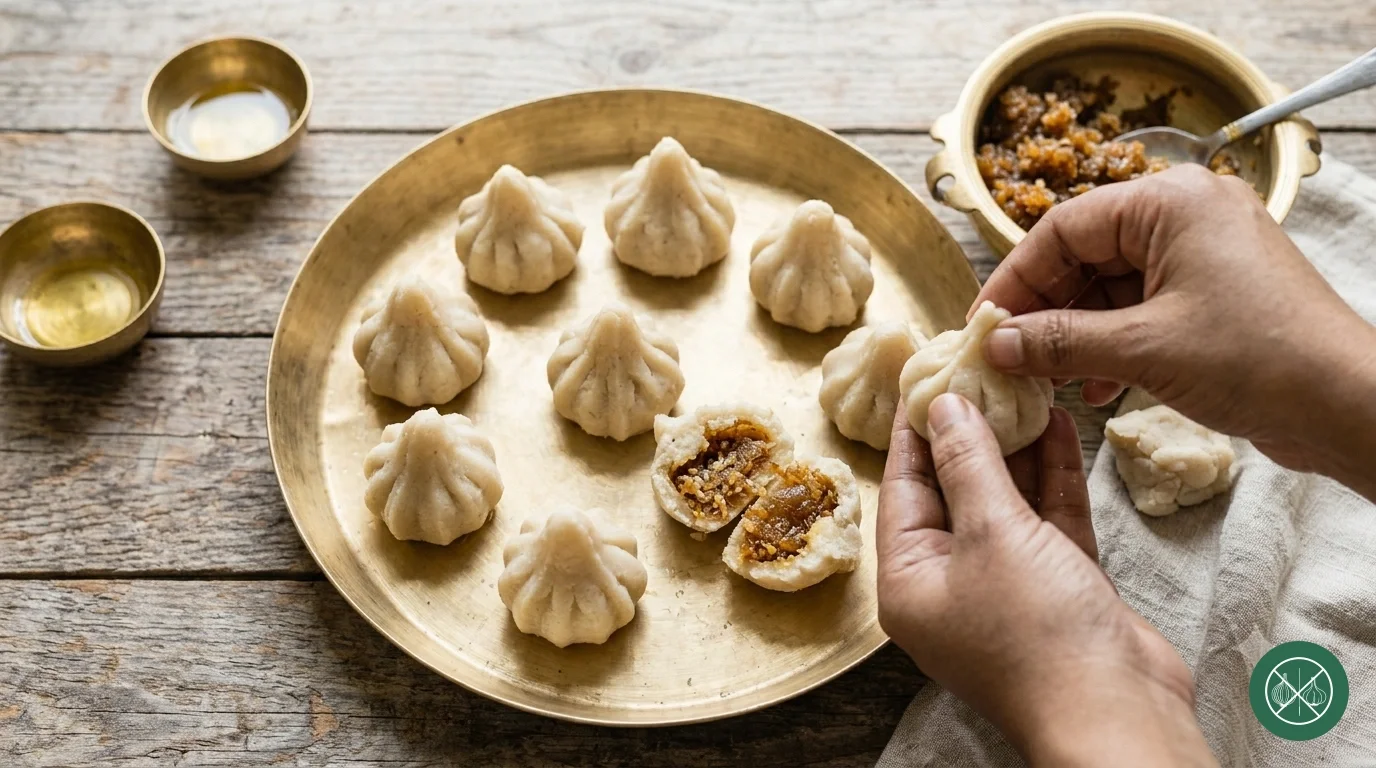
A mould-pressed mawa modak, not a steamed ukadiche one — the whole recipe is a moisture game. Fresh mango puree carries a lot of water, so it must be reduced in the kadhai before the khoya goes in, otherwise the mixture never leaves the sides and the moulded modak slump and weep within an hour. Cook the mango-khoya mass until it pulls away cleanly and a pinch rolled between the fingers holds its shape without sticking, then take it off the heat immediately — a minute too long and it turns grainy and cracks along the petal lines when you unmould. Mould while the dough is still warm; cooled mawa dough will not take a sharp impression.
Cook along · 15 steps
Method
- 1
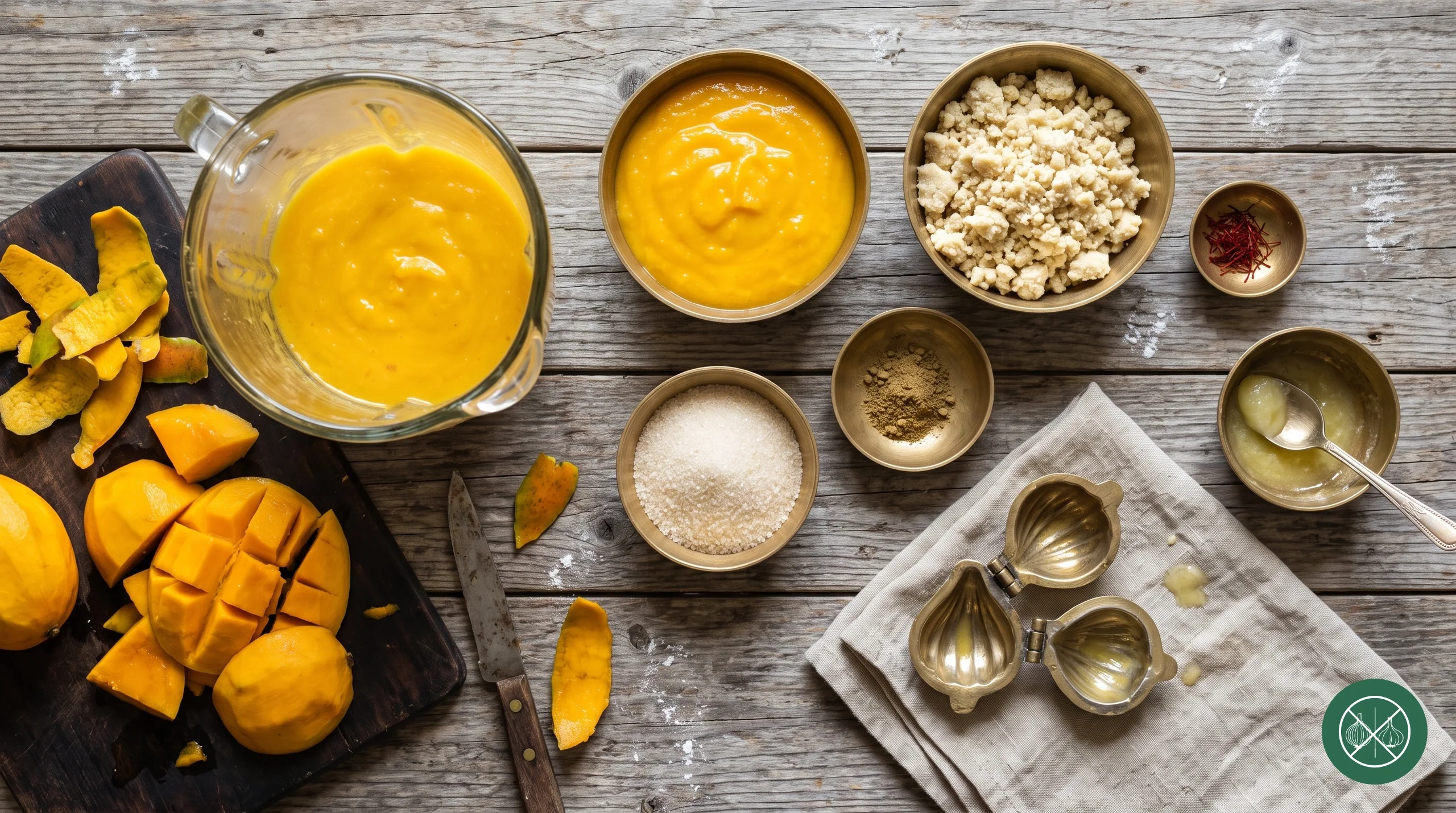
Prep the mango: Peel the mangoes and cut the flesh off the stone in cubes. Blend to a completely smooth puree with no fibre — strain through a sieve if your mangoes are stringy, because fibre shows up as a rough surface on the moulded modak. You want about 1.5 cups.
- 2
Soak the saffron: Warm 1 tbsp milk, drop the saffron strands in and leave them to bleed while you cook. Do not add saffron to the hot kadhai directly; it scorches and goes bitter.
- 3
Crumble the khoya: Grate or crumble the khoya into fine even crumbs with your fingers. Lumps of mawa melt at different rates and leave hard bits in the finished dough.
- 4
Reduce the puree: Heat a heavy kadhai on medium, add 1 tbsp ghee, then the mango puree. Cook 8-10 minutes, stirring every half minute with a wooden spatula, until the puree darkens slightly and reduces by about a third. This is the step people skip — unreduced puree makes modak that will not hold.
- 5
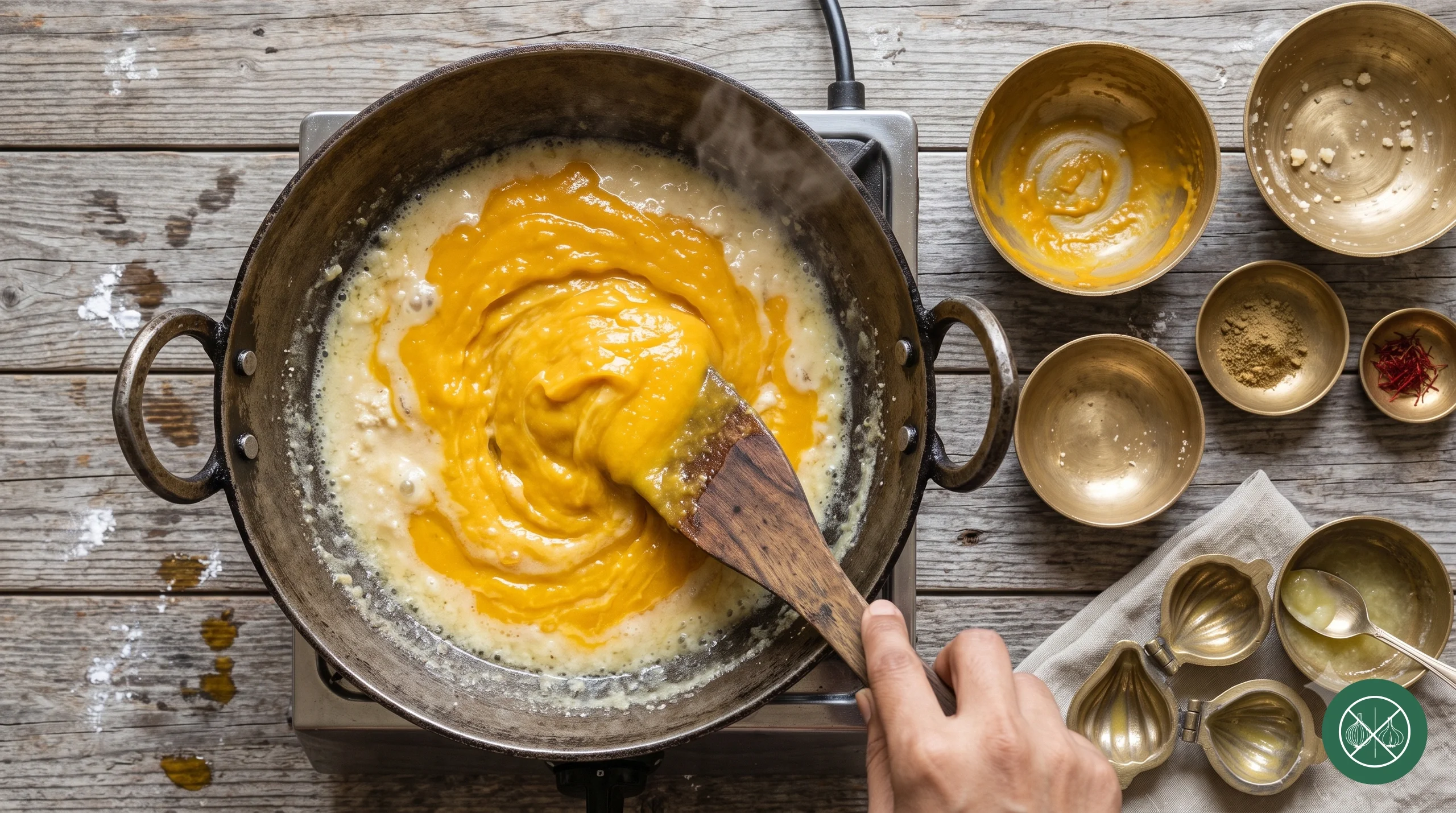
Add the khoya: Lower the heat to medium-low and add the crumbled khoya in three additions, stirring each in until it melts into the mango. The mixture will loosen and bubble around the edges — that is the khoya releasing its fat, and it is normal.
- 6
Sweeten: Stir in the boora. It will thin the mass again; keep stirring on medium-low and let that extra moisture cook off before you judge the texture.
- 7
Cook to dough: Keep stirring for 10-12 minutes. Watch for the mass to stop spreading and start moving as one lump, pulling cleanly away from the base and sides of the kadhai with a faint film of ghee left behind. Scrape the bottom constantly at this stage or it will catch and taste burnt.
- 8
Test it: Take a pea-sized bit, cool it a few seconds and roll it between your fingers. It should form a smooth non-sticky ball. If it still smears, cook 2 more minutes; if the dough looks slack even then, sprinkle in the milk powder and cook one minute more.
- 9
Flavour off the heat: Kill the heat, stir in the remaining 1 tbsp ghee, the elaichi powder and the saffron milk. Streak the saffron through rather than mixing it flat, so the finished modak carry faint threads of colour.
- 10
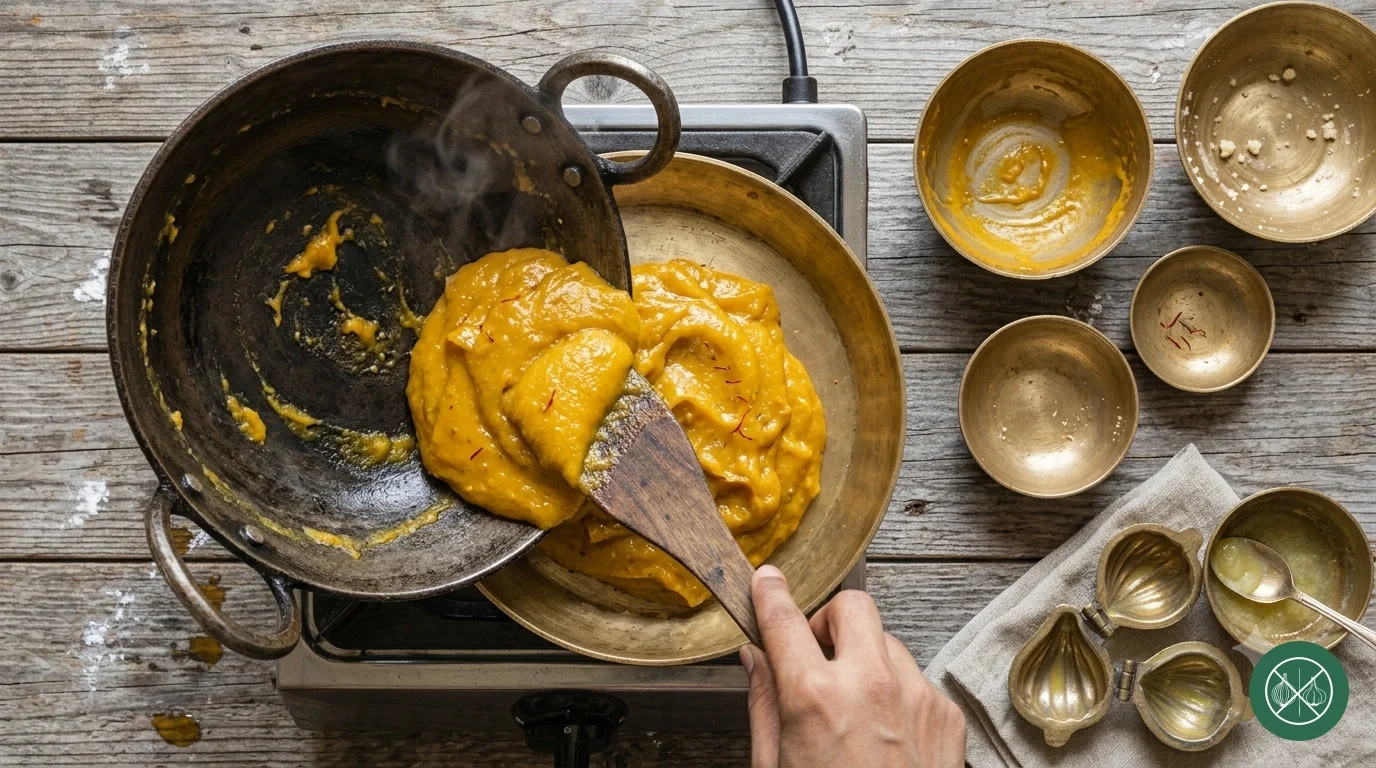
Transfer and cool: Scrape the whole mass out onto a wide brass thali or steel plate and spread it out. Cooling it in the hot kadhai will keep cooking it and turn the edges grainy. Let it sit 8-10 minutes until it is warm to the touch but not hot.
- 11
Knead smooth: Grease your palms with ghee and knead the warm dough on the plate for a minute until it is uniform and pliable, like a soft peda dough. Work quickly — this dough stiffens as it cools.
- 12
Portion: Roll the dough into lime-sized balls, about 25-30 g each, and keep them covered with a cloth so they do not skin over while you mould.
- 13
Mould: Grease the inside of the modak mould with ghee, close it, and press a ball into the cavity through the open base, filling the petals and the peak firmly. Flatten the base level with your thumb, trim off any excess, then open the mould and lift the modak out by its base.
- 14
Re-grease as you go: Wipe and re-grease the mould every three or four modak. A dry mould is what tears the ridges and leaves the peak broken.
- 15
Arrange and set: Stand the modak on a thali, scatter a few chopped cashew or pista around them, and let them firm up at room temperature for 20-30 minutes before offering. Refrigerate for up to 3 days, and bring back to room temperature before serving — cold mawa modak taste flat and chalky.
More festival recipes
Ukadiche Modak (Steamed Rice Flour Modak)
Kadalai Sundal (Chana Sundal)