festival · festive · ganesh-chaturthi · modak · steamed · south-indian · no-onion-no-garlic · sattvic · gluten-free
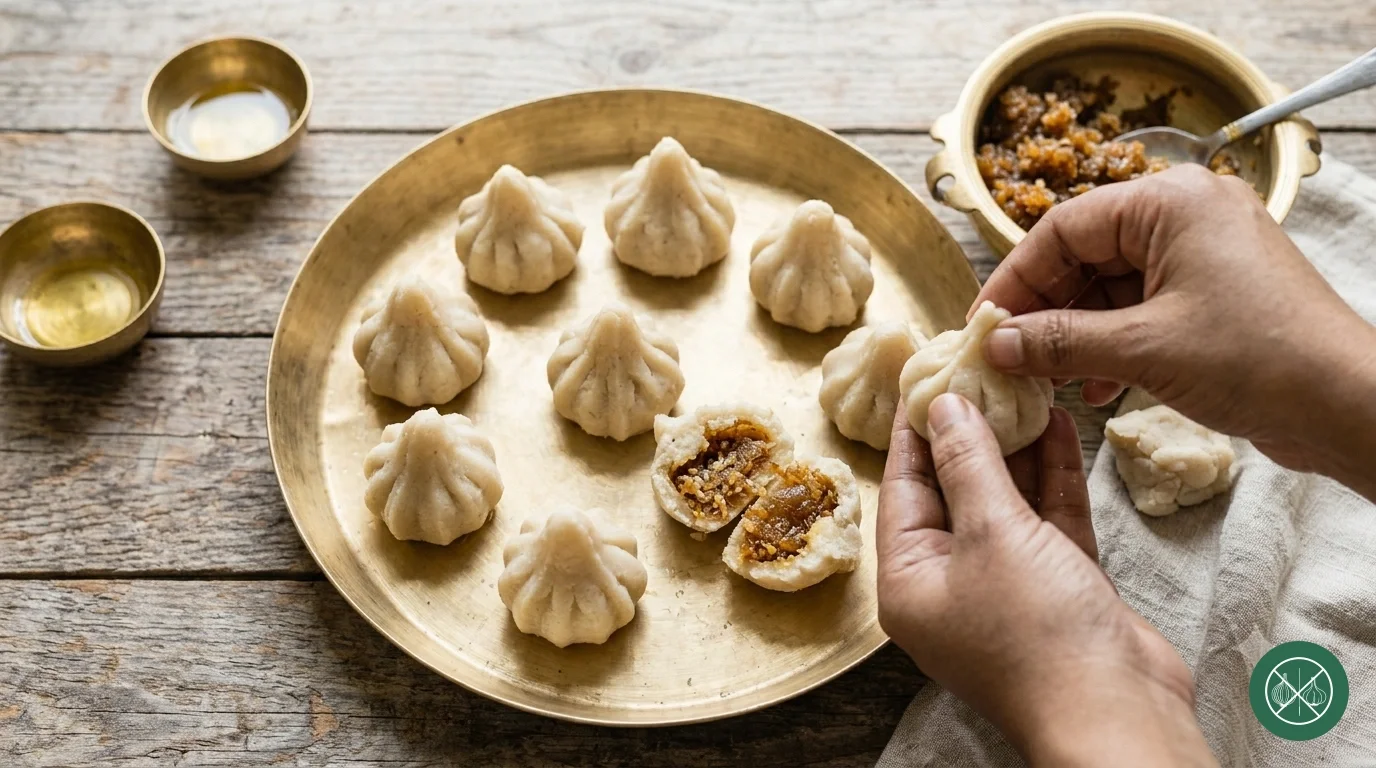
Kozhukattai (Steamed Rice Modak with Coconut-Jaggery Pooranam)
Kozhukattai lives or dies on the rice-flour dough: the water must be at a rolling boil and the flour-to-water ratio close to 1:1 by volume, or the dough stays grainy and every shell cracks open in the steamer. Knead it while it is still too hot to hold comfortably, using a wet palm or a damp cloth, because a cooled dough will never come together smooth. The pooranam is cooked only until the jaggery syrup coats the coconut and the mass leaves the sides of the kadai; take it further and it hardens into candy inside the shell. Shape by hand into a pleated cone or press in a greased brass modak mould, and steam 10-12 minutes only, until the white dough turns glossy and translucent.
Cook along · 16 steps
Method
- 1
Prep the coconut and jaggery: Grate 1 cup fresh coconut and keep it loose, not packed. Grate or finely chop 3/4 cup jaggery so it melts evenly. Set your steamer water to heat now so it is ready later.
- 2
Melt and strain the jaggery: In a heavy kadai on low heat, add the jaggery with 2 tbsp water and let it melt into a thin syrup, 3-4 minutes. Strain it through a fine sieve back into the kadai to catch grit and sand. Do not take it to any thread consistency, you only want it liquid so it can coat the coconut.
- 3
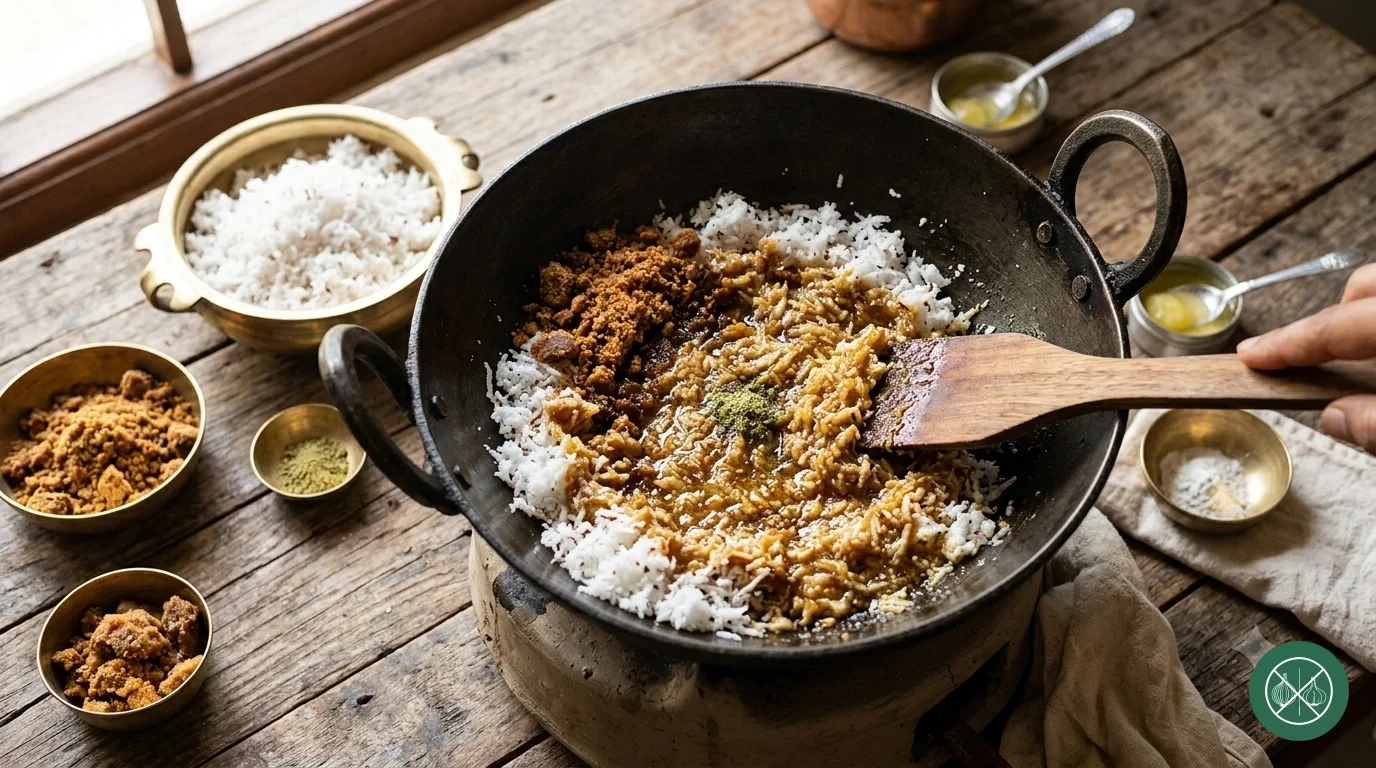
Cook the pooranam: Add the grated coconut to the melted jaggery and stir on low-medium heat for 6-8 minutes. The mixture will first loosen and look wet, then thicken as moisture cooks off. Stop when it holds together in a mass and pulls away from the sides of the kadai, it should still be moist, not dry or caramel-hard.
- 4
Finish and cool the filling: Stir in 1/4 tsp elaichi powder and 1 tsp ghee, switch off, and spread the pooranam on a plate to cool. If it looks too wet to hold a ball, work in 1 tbsp roasted rice flour. Cool fully before filling, hot pooranam tears the shell.
- 5
Boil the water for the dough: Bring 1 cup water to a rolling boil with 1/4 tsp salt and 1 tsp ghee. A bare simmer is not enough; the rice flour needs boiling water to gelatinise.
- 6
Scald the flour: Switch off the heat, tip in 1 cup rice flour all at once, and stir hard with a wooden spatula until no dry flour is visible and the mass gathers into a shaggy lump, about 1 minute. Cover and rest off the heat for 5 minutes so the steam finishes softening the flour.
- 7
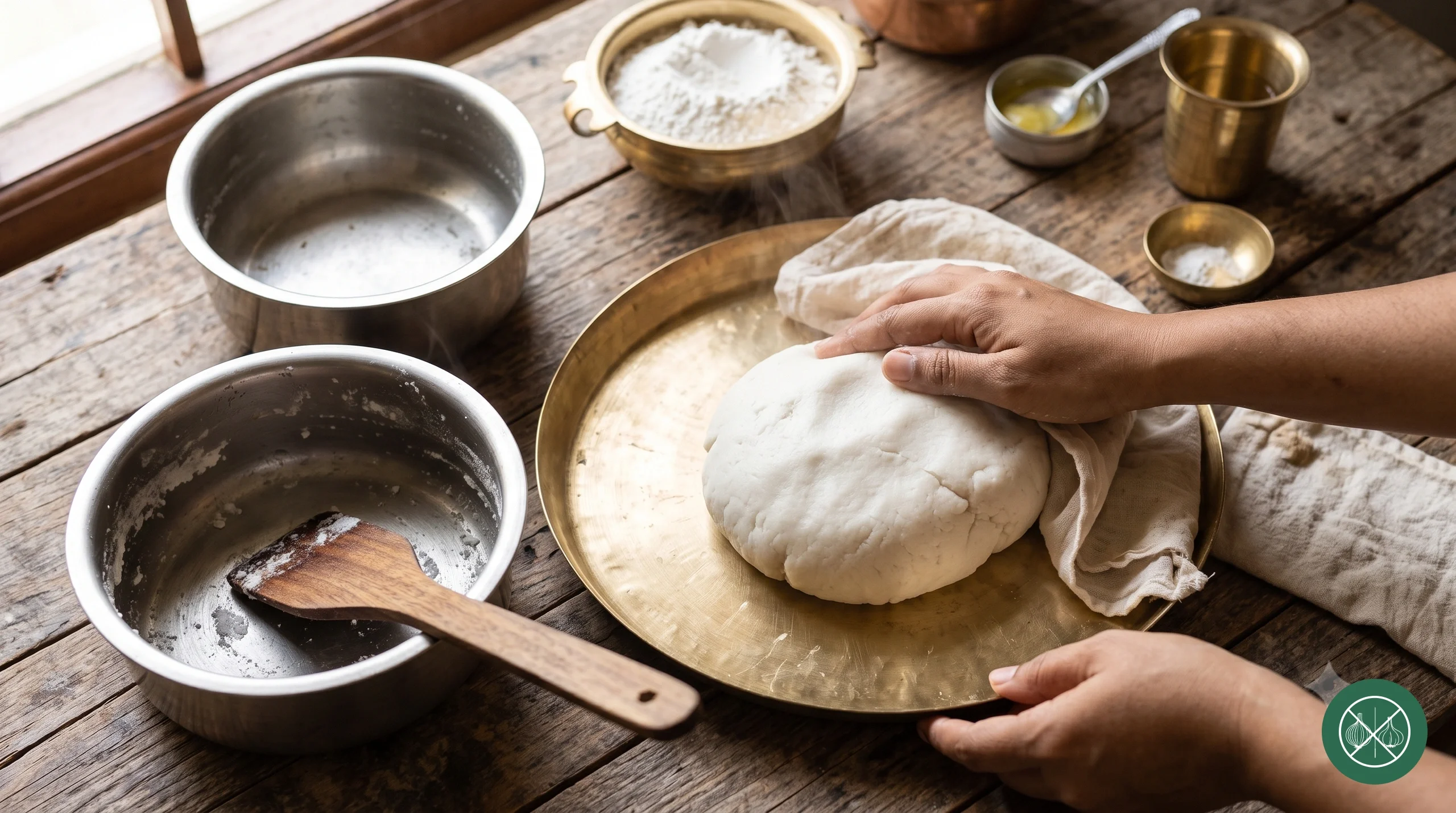
Knead the dough: Turn the hot dough onto a plate or thali and knead with a greased or wet palm, using a damp cloth to protect your hand, for 3-4 minutes. Work it until it is completely smooth and satiny with no grainy specks. If it cracks when pressed, sprinkle a teaspoon of hot water and knead again; if it sticks, dust with a little dry rice flour.
- 8
Keep it covered: Cover the kneaded dough with a damp cloth at all times. Exposed dough dries within minutes and dried dough will split while shaping.
- 9
Portion the dough: Pinch off lime-sized pieces and roll them into smooth balls between greased palms, keeping the rest under the cloth. You should get 12-14 balls from 1 cup flour.
- 10
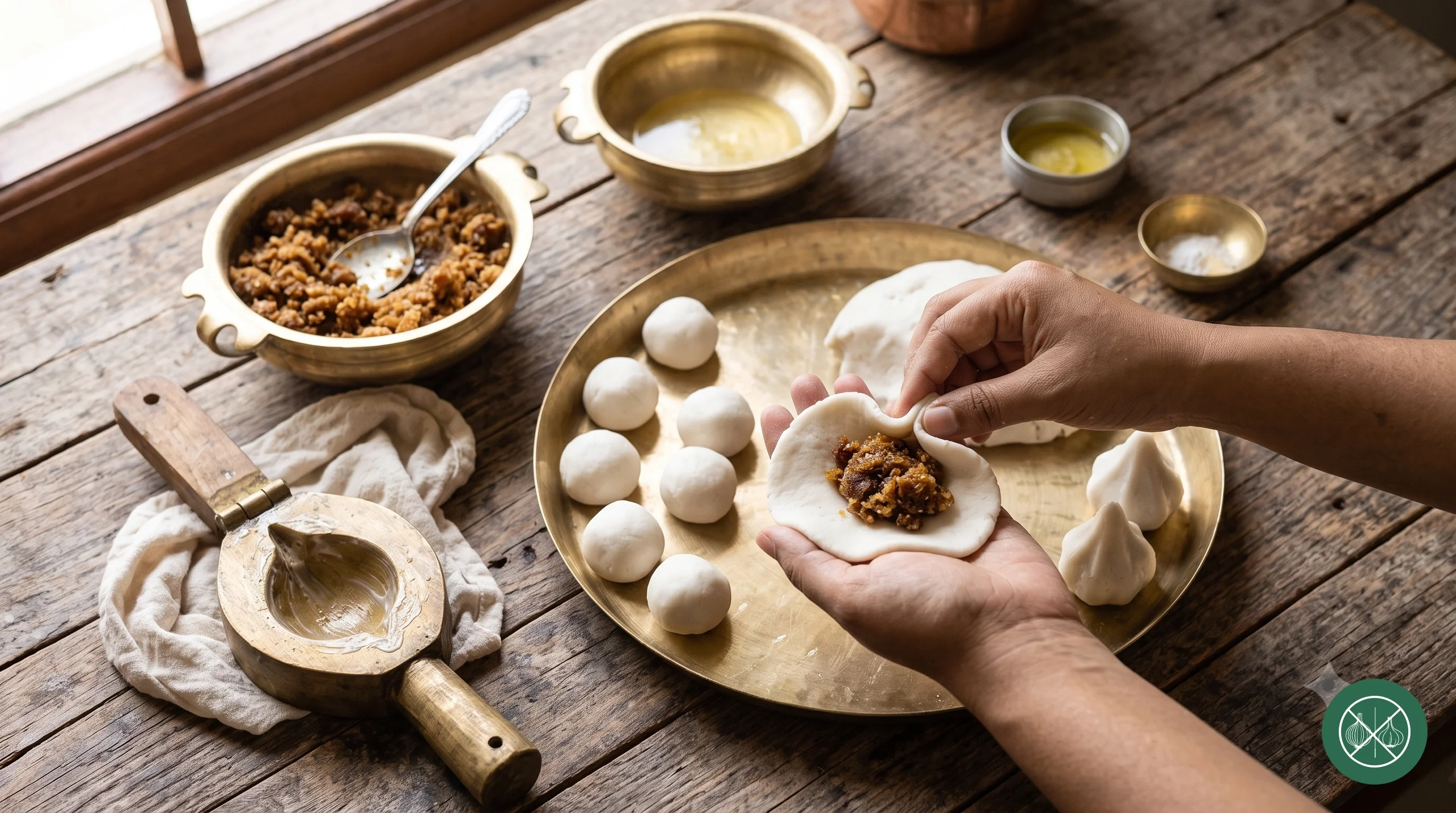
Shape the cup: Grease your palm lightly, flatten a ball and press outward with your fingertips into a thin 3-inch disc with a slightly thicker centre. Thin edges pleat better; a thick edge makes a doughy modak.
- 11
Fill and pleat: Place a heaped teaspoon of cooled pooranam in the centre. Pinch small pleats around the rim with your thumb and forefinger, gather them upward and press the tips together into a single point. Roll the tip gently to seal it.
- 12
Or use a mould: Grease the inside of a brass modak mould with ghee, press dough up the walls to line it, spoon in the pooranam, seal the base with a small dough disc, and open the mould to release a clean modak. Smooth any seam with a greased finger.
- 13
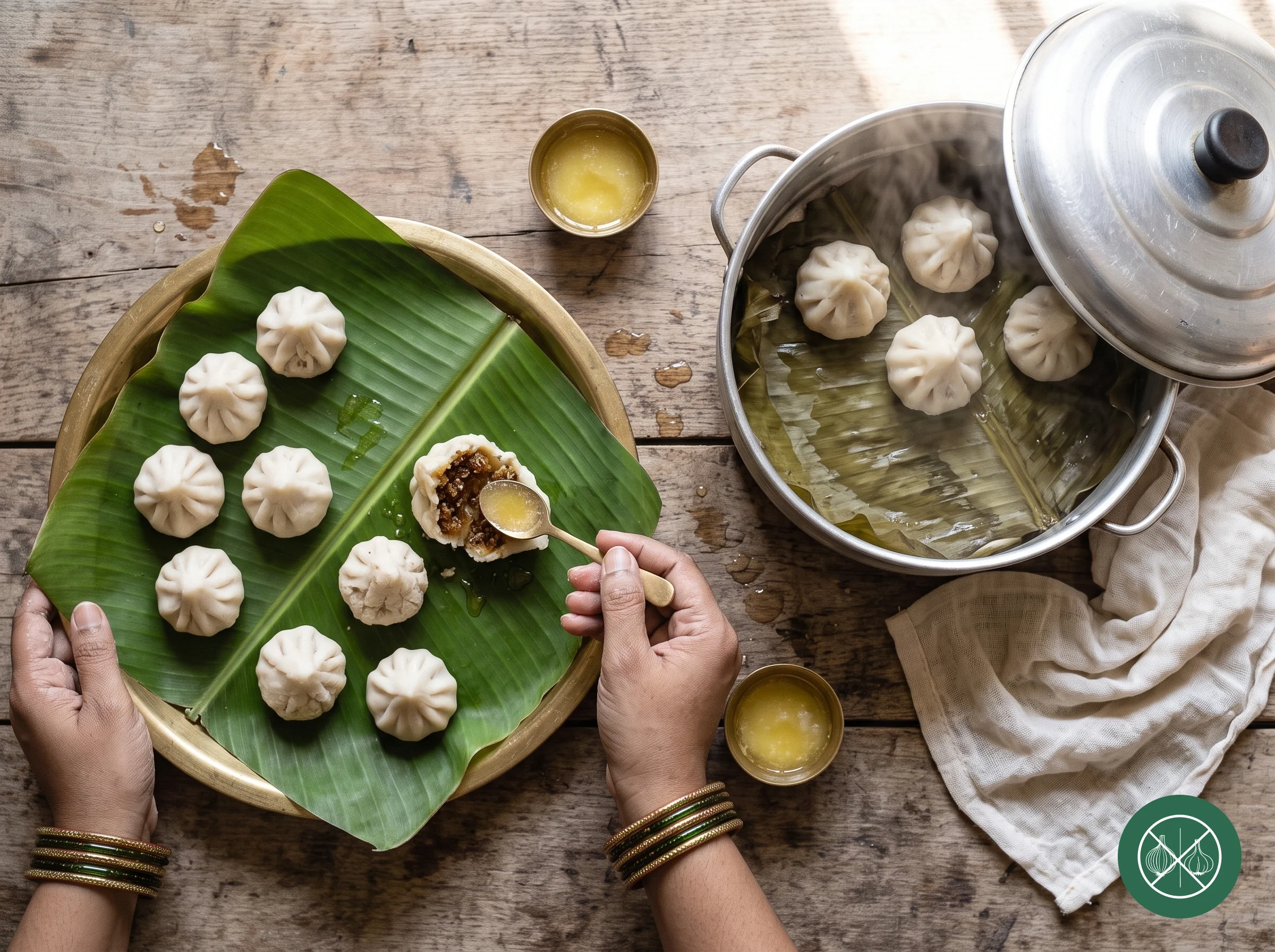
Line the steamer: Lay a piece of banana leaf on the steamer plate and grease it lightly. Arrange the kozhukattai tip-up with a finger gap between them, they swell slightly and will fuse if crowded.
- 14
Steam: Steam on medium heat for 10-12 minutes with the lid on. They are done when the chalky white surface turns glossy and slightly translucent and a modak lifts off the leaf cleanly. Over-steaming makes the shells collapse and weep jaggery.
- 15
Rest before lifting: Switch off and let them stand 3-4 minutes in the open steamer. Hot kozhukattai are fragile; a short rest firms the shell enough to move them without tearing.
- 16
Serve: Lift onto a banana leaf, brush with a little ghee if you like the shine, and offer warm as naivedyam. They stay soft for a day at room temperature; refrigerating makes the rice shell hard, so re-steam for 3 minutes to revive.
More festival recipes
Ukadiche Modak (Steamed Rice Flour Modak)
Kadalai Sundal (Chana Sundal)