festival · festive · ganesh-chaturthi · besan · laddu · mithai · sattvic · no-onion-no-garlic
Besan Laddu
Besan laddu is one long roast and nothing else — coarse besan cooked in ghee on low heat until the raw flour smell goes and the mass turns from pale and sandy to loose, glossy and nut-brown. The two failures are both about heat: rushing the roast leaves a raw, chalky aftertaste that no amount of sugar hides, and adding boora to a hot mixture melts it into syrup so the laddu sets rock-hard instead of crumbly-soft. Use ladoo besan (coarse) rather than fine besan so the grains stay separate, and let the mixture cool to just-warm before the sugar, nuts and elaichi go in. It shapes while warm and firms up as the ghee resets at room temperature.
Cook along · 14 steps
Method
- 1
Prep the add-ins: Chop the cashews coarse, pick the stems off the kishmish, and pound the green elaichi seeds to a fine powder. Set aside about a tablespoon of the chopped cashews and a few kishmish for the tops. Sieve the boora so no lumps go into the warm mixture. Keep everything in small bowls next to the stove — once the besan is roasted you will not have time to weigh anything.
- 2
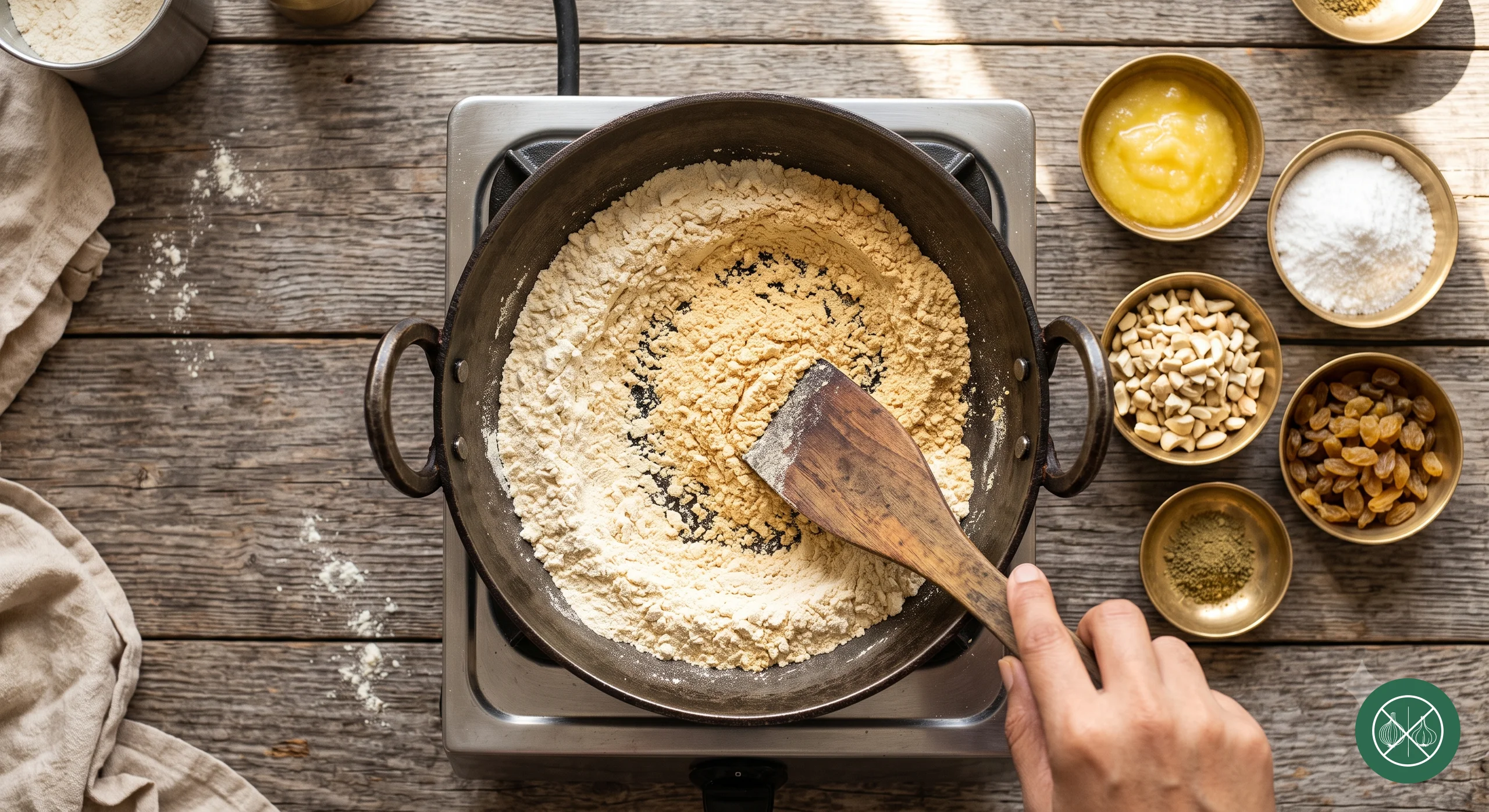
Dry-warm the besan: Set a heavy kadhai or cast-iron pan on low heat and add the besan alone, with a pinch of salt. Stir with a flat wooden spatula for 3-4 minutes just to drive off any damp — the flour will look pale, sandy and loose, exactly as it went in.
- 3
Add the ghee: Pour in the 3/4 cup melted ghee in two goes, cutting it through the flour with the spatula. It will first look like wet sand, then seize into a thick, stiff paste that drags on the spatula. Keep the flame low, never medium — besan scorches at the base long before the top looks done.
- 4
Roast, stage one: Stir continuously for the first 10 minutes, scraping the bottom of the pan every few seconds. The paste stays tight and heavy and smells raw and beany. Do not add extra ghee yet; it is meant to feel stiff at this point.
- 5
Roast, stage two: Around the 12-15 minute mark the mass loosens and starts to slip off the spatula, and the colour moves from pale yellow to light sand. If it still looks dry and clumpy, work in 1-2 tbsp of the extra ghee now.
- 6
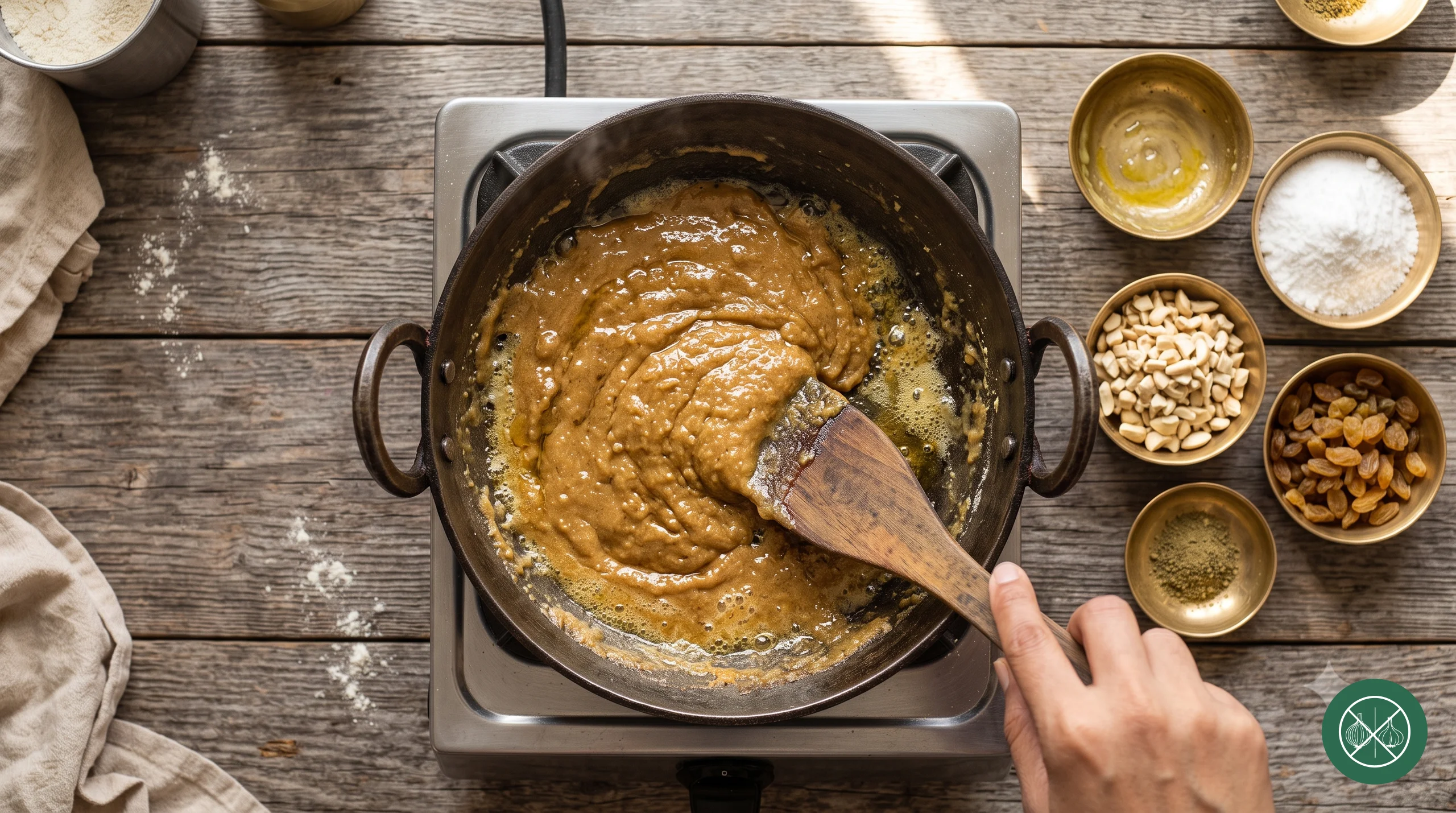
Roast, stage three: At 20-25 minutes total the besan turns golden-brown, the ghee separates and pools visibly at the edges, and the mixture ripples and flows like a thick batter when you drag the spatula through. The smell turns nutty, like roasted chana. This flowing, glossy stage is the finish line — stop here.
- 7
Judge by nose and flow, not the clock: Thick-bottomed pans take longer. The mixture is done only when it pours slowly off the spatula and smells sweetly nutty with no raw edge. Under-roasted besan tastes chalky in the finished laddu and cannot be fixed later.
- 8
Cool it down: Take the pan off the flame and transfer the mixture to a wide steel parat or thali so it stops cooking — left in the hot kadhai it keeps roasting and can catch. Spread it out and let it cool 10-12 minutes, until it is warm to the touch but no longer hot, around body temperature. Sugar added to a hot mixture dissolves and sets hard.
- 9
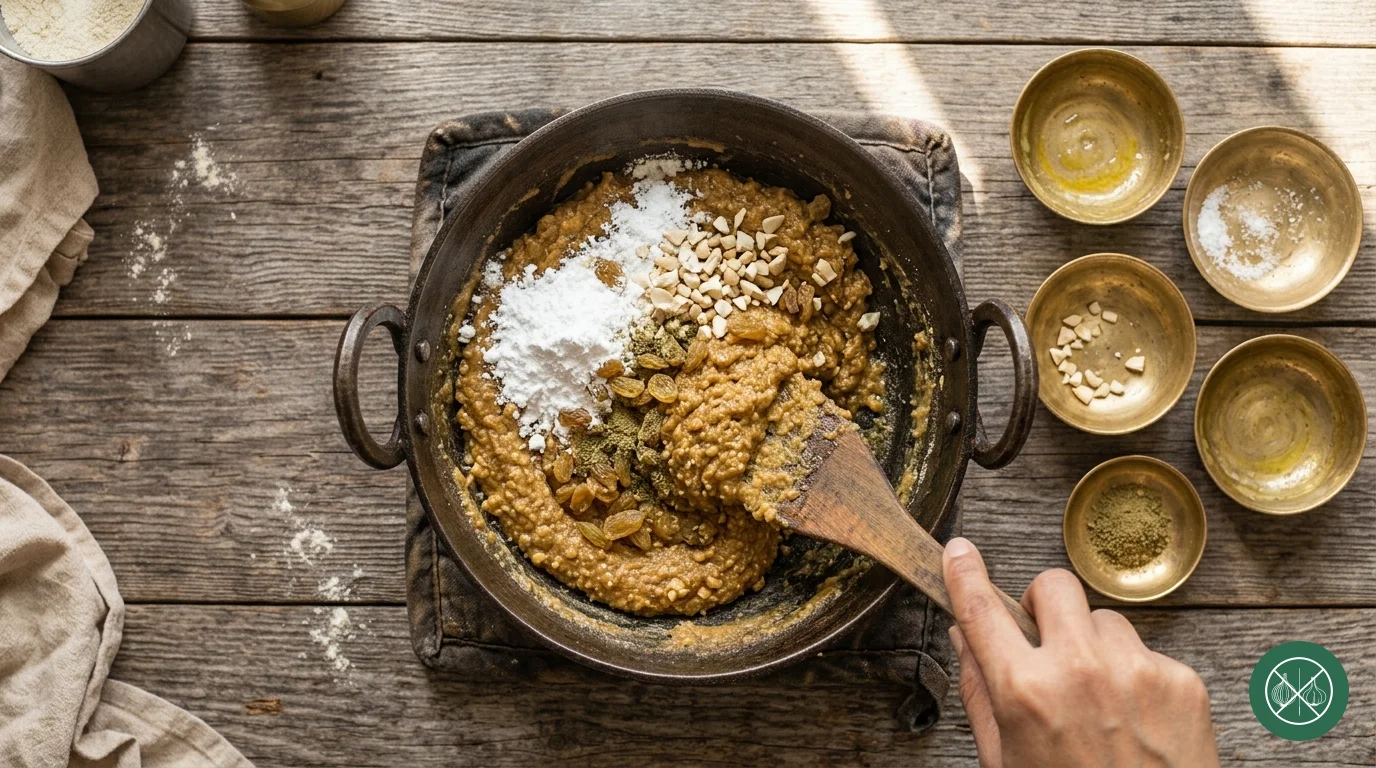
Add sugar and flavour: Tip the sieved boora, elaichi powder, chopped cashews and kishmish over the warm mixture. Rub and fold everything together with your fingertips rather than a spatula, so the sugar stays as grains and the mixture turns crumbly and even-coloured.
- 10
Check the bind: Press a little in your fist. It should hold its shape and feel just-oily. If it crumbles apart, warm the remaining tbsp of ghee and work it in a teaspoon at a time — the fat, not moisture, is what binds a besan laddu. Never add milk or water.
- 11
Shape the laddus: Take a lemon-sized portion, about 2 tablespoons, and press it firmly between your palms two or three times before rolling it round. That firm press is what stops the laddu from falling apart; a light roll will not bind the grains.
- 12
Roll the batch: Work through the whole mixture while it is still warm, keeping the shaped laddus on a thali. If the mixture cools too much and stops binding, warm the parat over the lowest flame for a minute and continue.
- 13
Garnish and set: Press one of the reserved cashew pieces or a kishmish into the top of each laddu. Leave them uncovered on the thali for 2-3 hours at room temperature — the ghee resets and the laddus firm up from soft to sliceable.
- 14
Store: Once fully set and cool, keep them in an airtight steel dabba at room temperature for up to 15 days. Do not refrigerate; the cold hardens the ghee and turns them dense and dry.
More festival recipes
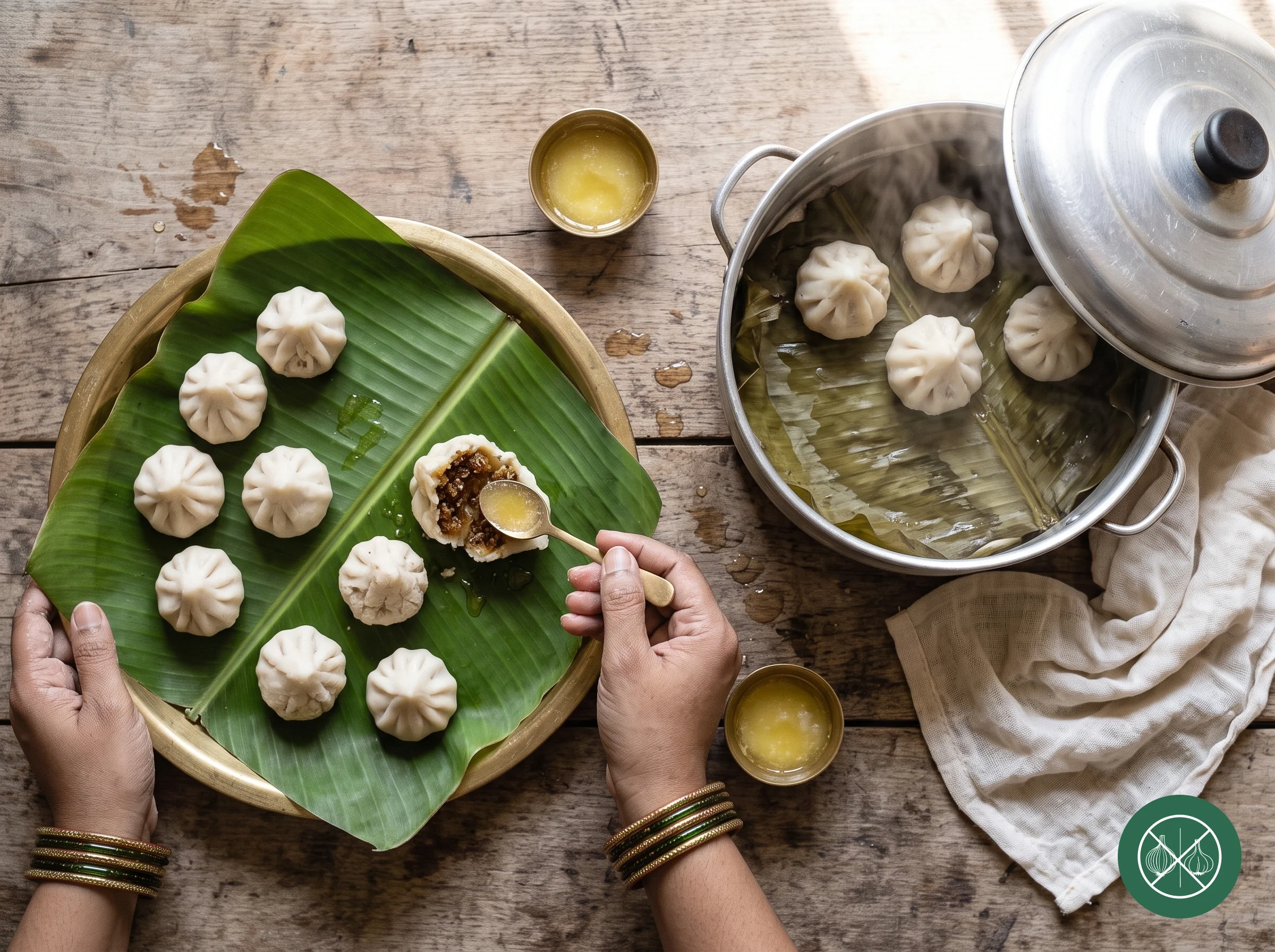
Ukadiche Modak (Steamed Rice Flour Modak)
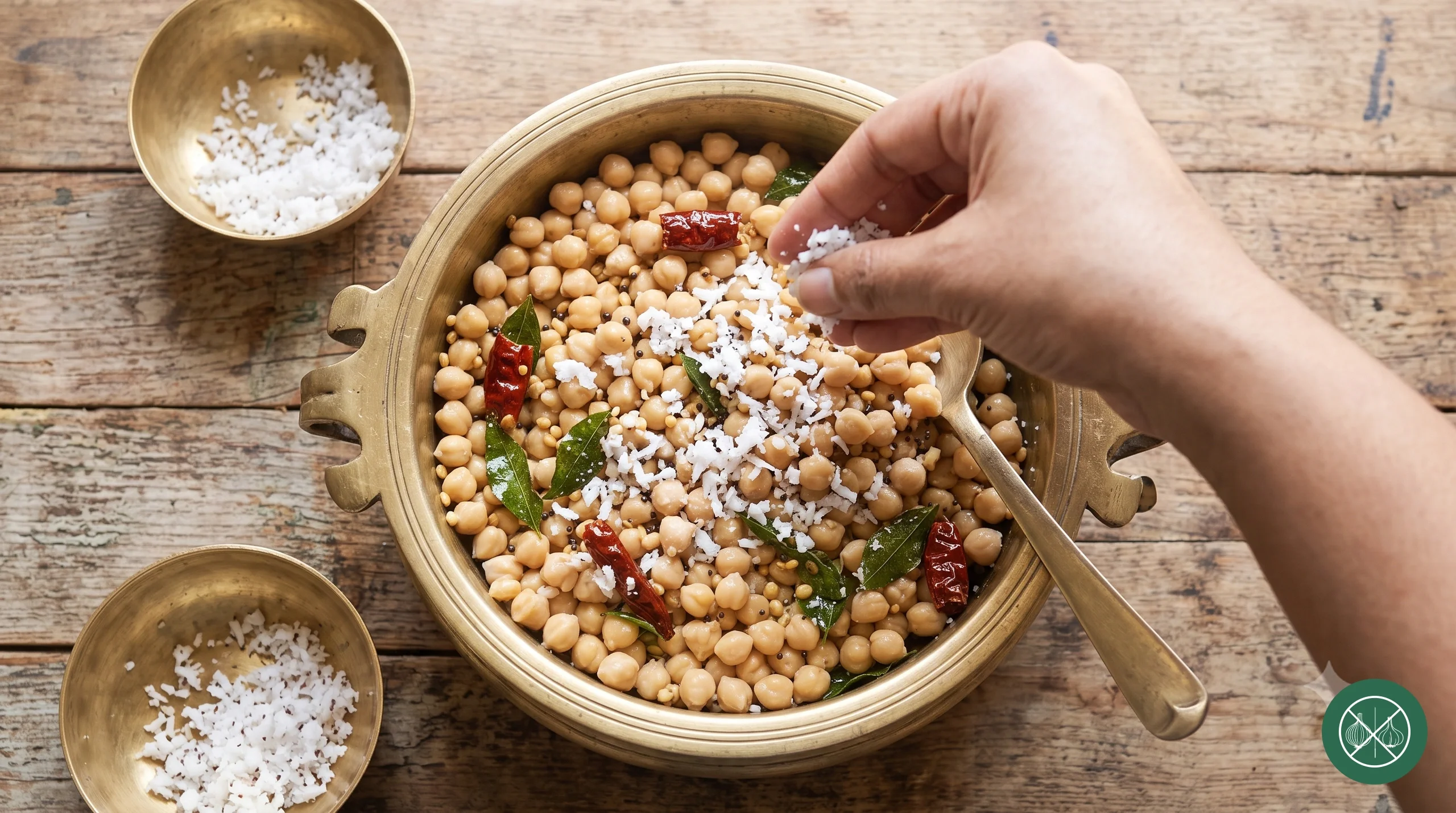
Kadalai Sundal (Chana Sundal)